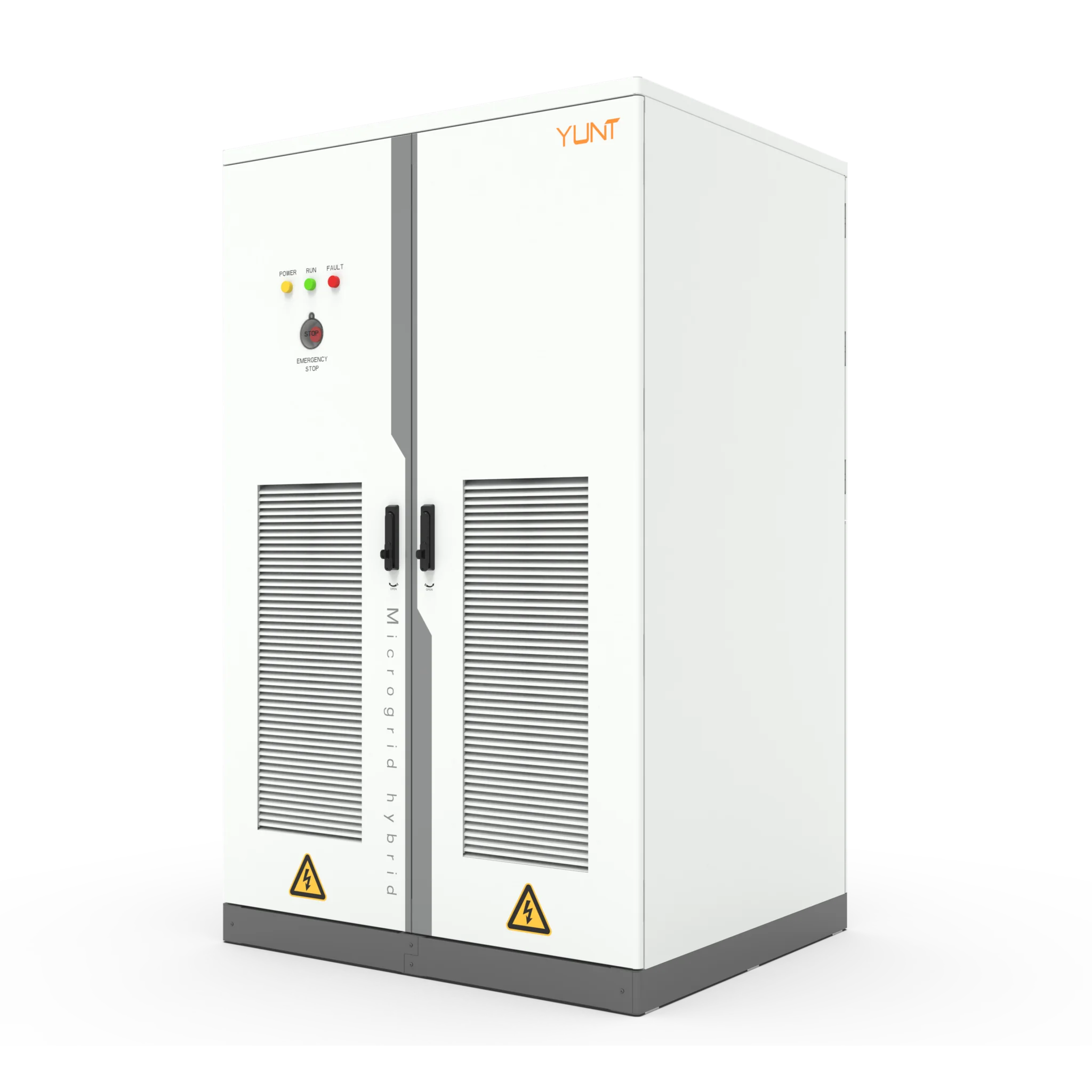
Commercial and industrial facilities require continuous electrical power to protect sensitive equipment and maintain uninterrupted production schedules. Choosing appropriate energy conversion hardware determines system responsiveness during unexpected utility outages. Facility engineers frequently evaluate standard grid-tied inverters alongside dedicated backup generators versus integrated multi-source topologies. Selecting the right configuration directly influences physical equipment footprint, system transfer latency, and long-term operating costs. Partnering with a reliable hybrid power inverter supplier like YUNT helps commercial developers deploy dependable conversion hardware engineered specifically for demanding industrial environments.
Operational Constraints & Reliability Hurdles of Traditional Grid Tied and Multi Cabinet Systems
Standard grid-tied solar inverters convert Direct Current (DC) from Photovoltaic (PV) arrays into Alternating Current (AC) synchronized with the utility grid. However, standard grid-tied units feature rigid operational constraints during power outages. Safety standards require grid-tied inverters to anti-island and immediately shut down when the utility grid voltage drops. This protective feature prevents dangerous electrical back-feeding into external lines, but it renders on-site solar generation completely unavailable during grid disruptions.
To achieve emergency backup capabilities using standard equipment, facilities may need to integrate separate Power Conversion System (PCS) cabinets, external Battery Management System (BMS) controllers, and mechanical Automatic Transfer Switch (ATS) hardware. This multi-cabinet strategy introduces distinct operational hurdles. Mechanical transfer switches often require 20 ms to 50 ms to engage, causing voltage dips capable of resetting automated machinery, programmable logic controllers, and precision computer systems. Furthermore, routing electrical power across separated hardware units increases overall site footprint, introduces complex communication protocols between isolated sub-systems, and degrades round-trip conversion efficiency.
How Shared DC Bus Topology Optimizes Multi-Energy Integration
Modern power hardware solves these integration challenges by unifying solar charge control, battery storage interfacing, and grid transfer mechanisms within a singular industrial enclosure. Deploying an advanced YUNT hybrid power inverter enables direct DC-coupling for both solar PV arrays and lithium battery banks on a shared internal high-voltage DC bus bar. Excess solar generation charges energy storage systems directly through bidirectional DC-DC channels, avoiding intermediate DC-to-AC conversion losses and preserving overall system energy yield.
Fast Solid-State Transfer Switching under 10 Milliseconds
Integrated conversion architectures also incorporate a built-in Static Transfer Switch (STS) alongside an isolation transformer to manage rapid energy supply shifts. When external grid power fails, the internal STS detects phase disruptions in microseconds and transfers operating modes from grid-tied supply to off-grid supply in under 10 milliseconds. This rapid switching capability prevents control system resets across sensitive automated production lines. Additionally, built-in power-frequency isolation transformers provide galvanic isolation, suppressing electrical noise and handling unbalanced three-phase industrial loads effectively.
Cold Storage Logistics: Power Vulnerabilities and Seamless Continuity During Grid Outages
Cold-storage logistics facilities require reliable power to maintain temperature controls and protect temperature-sensitive inventory. A facility relying on standard grid-tied solar alongside traditional diesel backup generators faces severe operational risks during sudden utility outages. While a diesel generator requires 15 to 30 seconds to crank and reach steady-state AC output, the solar array disconnects immediately due to anti-islanding protections. During this critical power gap, refrigeration compressors shut down, microcontrollers drop offline, and auxiliary pumps experience severe electrical stress.
Upgrading to an integrated hybrid power inverter setup transforms facility resilience during these operational disruptions. During standard grid operations, the equipment performs peak shaving by drawing from stored battery power during expensive demand charge windows. When an abrupt utility grid collapse occurs, the unit’s built-in STS transitions to off-grid backup mode in less than 10 milliseconds helping maintain power to refrigeration controls. On-site solar arrays continue generating power directly to the shared DC bus bar, supplying refrigeration loads while simultaneously recharging the central lithium battery bank.
Benchmark Parameters for High-Capacity Commercial Configurations
Evaluating performance parameters across backup power options highlights significant operational differences. While conventional multi-cabinet configurations rely on mechanical ATS components with 20 ms to 50 ms transfer delays, integrated hybrid platforms achieve sub-10 ms seamless transfer speeds. Standard equipment often limits Maximum Power Point Tracking (MPPT) tracking ranges between 350 V and 800 V DC, whereas advanced hybrid units accommodate wide MPPT tracking ranges from 150 V to 1000 V DC. This wider voltage range allows project engineers to maximize solar string capacity across complex commercial facility rooftops.
Performance Benchmarks & Scalable Design for Industrial Smart Grid Deployment
Selecting unified energy conversion equipment simplifies ongoing maintenance routines while lowering total cost of ownership over a long operational lifespan. Integrated units like YUNT’s Neptune series offer 125 kW rated power outputs that scale up to 1000 kW configurations within IP20 or IP54 industrial enclosures. Cluster-based battery management features route independent battery strings into distinct input channels, reducing circulating currents between parallel battery packs to extend battery service life. Working directly with a certified hybrid power inverter supplier ensures commercial developers build scalable power infrastructure equipped to meet global energy transition demands.
