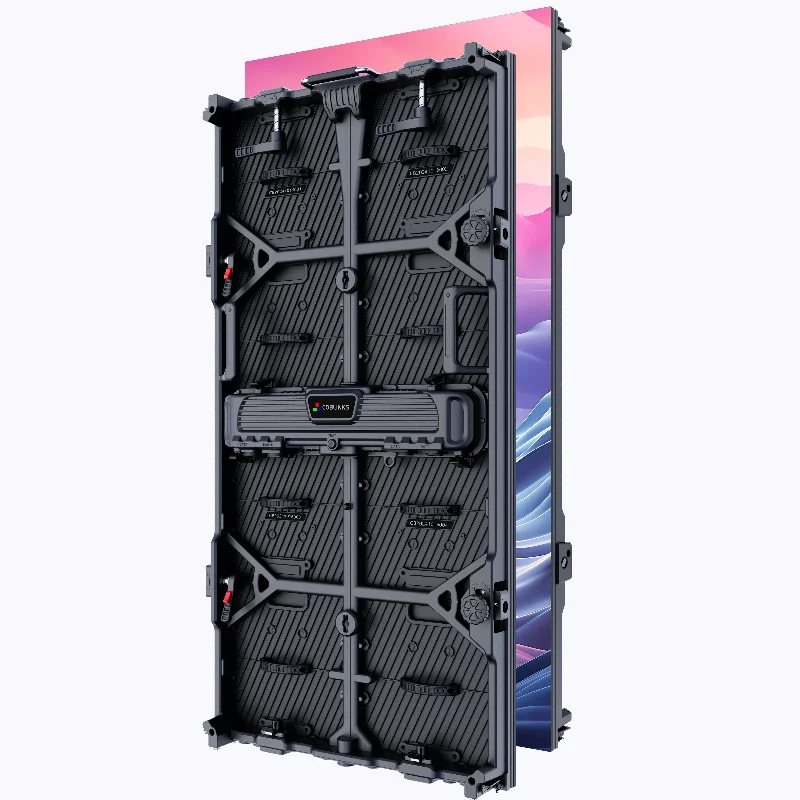
Extreme cold presents a different reliability challenge for digital signage than ordinary winter weather. An outdoor LED screen must continue displaying content while its electronic components, power system, cabinet, and protective seals face low temperatures, snow, moisture, and repeated thermal changes. For advertisers, transport operators, venues, and other commercial users, reliable winter performance depends less on simply choosing an “outdoor” model and more on evaluating the complete system.
Why Extreme Cold Matters to an Outdoor LED Screen
LED displays generate heat during operation, so freezing ambient temperatures do not automatically mean that the electronics will become too cold to function. The greater concern is whether individual components are designed and tested for the specified operating environment. Commercial outdoor models commonly have defined temperature ranges, while specialized displays can be engineered for substantially colder conditions.
Cold starts can be particularly demanding. A display that operates normally after warming up may not necessarily start reliably when powered on at very low temperatures. Power supplies, driver electronics, connectors, and control components all need suitable cold-temperature characteristics. For installations in consistently freezing regions, buyers should therefore examine both the operating range and any stated cold-start requirements instead of relying on a general outdoor classification.
Thermal Management Works Differently in Winter
Thermal management is usually associated with preventing overheating, but it remains important during freezing conditions. An LED cabinet must dissipate internally generated heat while preventing temperature differences from creating reliability problems. A well-engineered enclosure balances heat dissipation, component protection, and airflow according to the intended climate.
Another issue is thermal cycling. Outdoor advertising equipment can experience large temperature changes between daytime operation, nighttime shutdown, sunlight exposure, and sudden weather changes. Repeated expansion and contraction can place mechanical and electrical connections under stress over time. Consequently, climate suitability should be considered across the complete operating cycle rather than judged by the lowest temperature alone.
Protection Against Snow, Water, and Condensation
Freezing temperatures often arrive together with precipitation, making enclosure protection equally important. IP ratings describe protection against solid particles and water ingress; for example, IP65 indicates a dust-tight enclosure with protection against water jets. However, an IP rating should not be interpreted as a complete guarantee of winter performance because it does not by itself define temperature capability or resistance to every environmental condition.
Condensation also deserves attention. When a cold cabinet is exposed to warmer, humid air, moisture can form around internal components if the enclosure and thermal design are inadequate. This makes sealing, component selection, drainage, and installation quality important considerations for an outdoor LED screen deployed through repeated freeze-thaw cycles.
Brightness and Image Stability Still Matter
Temperature is only one part of outdoor display performance. Advertising screens also need sufficient brightness to remain readable under daylight, while consistent color and image reproduction are important for commercial campaigns. High-quality outdoor systems therefore combine environmental protection with appropriate optical and electronic design.
For an outdoor advertising LED display, this balance becomes especially relevant when content must remain visible throughout changing winter conditions. Snow can create strong reflected light, while shorter winter daylight hours may produce rapid transitions between bright and dark environments. Proper brightness management can help maintain visibility without unnecessarily increasing power consumption or thermal load.
What Buyers Should Check Before a Winter Installation
B2B buyers should begin with the actual climate data for the installation site. The key questions include the lowest expected ambient temperature, frequency of freezing conditions, exposure to snow or rain, humidity, wind, and the number of daily operating hours. These factors establish whether a standard outdoor product is sufficient or whether a specialized configuration is required.
The display’s published specifications should then be compared with those environmental requirements. Temperature range, enclosure protection, power-system characteristics, maintenance access, and installation structure all deserve attention. A manufacturer should also be able to explain which environmental conditions its stated specifications cover rather than simply describing a product as “rugged.”
Where Coblinks MD Series Fits
For projects requiring a flexible display solution, Coblinks’ MD Series is positioned as an indoor & outdoor rental installation LED panel designed for fast building and wind-load resistance. Its outdoor pixel-pitch options are 2.9mm, 3.9mm, and 4.8mm, giving project planners several configurations for different viewing distances and installation requirements.
Coblinks is a technology-driven outdoor advertising LED display manufacturer with complete SMT production lines and advanced manufacturing equipment. The company develops indoor and outdoor fixed-installation and rental displays and provides customized solutions. For buyers planning installations in cold regions, the relevant environmental requirements should still be matched with the selected configuration and project conditions before deployment.
Making Cold-Climate Reliability Part of the Specification
Extreme freezing temperatures do not make digital outdoor advertising impractical, but they raise the standard for equipment selection. A reliable outdoor LED screen needs appropriate temperature capability, environmental protection, thermal design, and dependable electrical components. Installation practices and maintenance planning are equally important because even a well-designed display can suffer when its environmental limits are ignored.
For commercial operators, the best approach is to treat climate performance as part of the original specification rather than as an afterthought. The same principle applies when selecting an outdoor advertising LED display for billboards, event venues, transportation locations, or other high-visibility applications. Matching the display to the real operating environment can reduce unexpected downtime and protect the long-term value of the installation.
A Practical Choice for Demanding Outdoor Projects
Coblinks develops LED display solutions for indoor and outdoor fixed installations as well as rental applications, supported by its SMT production lines and manufacturing capabilities. Its MD Series combines fast-building characteristics with wind-load resistance and offers outdoor pixel pitches from 2.9mm to 4.8mm. Businesses evaluating cold-climate projects can work with Coblinks to assess the appropriate display configuration for their specific installation requirements and environmental conditions.
