In the fast-paced world of modern research and clinical diagnostics, the term “laboratory automation” has shifted from being a luxury for large-scale facilities to an essential strategy for any lab striving for precision and scalability. As we move into 2026, the demand for higher throughput and error-free data has made the integration of robotics a cornerstone of scientific advancement.
At its core, laboratory automation refers to the use of technology—ranging from specialized software to highly articulated robotic arms—to perform repetitive, manual tasks with minimal human intervention. By automating processes such as liquid handling, sample preparation, and diagnostic testing, laboratories can transcend the limitations of manual labor, ensuring that scientific breakthroughs are reached faster and with greater reliability.
The Core Pillars of Laboratory Automation
Lab automation is not a single tool but an interconnected ecosystem of hardware and software working in unison. It is generally categorized into three primary levels:
Task-Specific Automation: Using dedicated devices for a single process, such as an automated centrifuge or a standalone plate sealer.
Modular Workstations: Integrating a mini robot arm with several instruments to handle a sequence of tasks, such as moving a sample from a liquid handler to an incubator.
Total Laboratory Automation (TLA): A fully integrated system where software orchestrates the entire workflow from pre-analytical sample intake to final data analysis and storage.
By transitioning through these levels, laboratories can eliminate the variability inherent in human performance, ensuring that every pipetting step, mixing cycle, and thermal incubation is executed identically every single time.
Why Modern Labs are Turning to Robotics
The “Lab of the Future” is no longer a concept—it is a reality driven by the need for resilience and accuracy. Here are the primary reasons why a lab automation robot is now a standard fixture in the following professional research:
1. Unrivaled Reproducibility
In science, reproducibility is the gold standard. Manual processes are prone to “human drift”—slight variations in technique that occur over a shift due to fatigue. A robot follows its programmed path with sub-millimeter precision, ensuring that experiments conducted in different months or across different sites produce consistent, comparable data.
2. Increased Throughput and 24/7 Operation
Unlike human technicians, automated systems do not require breaks or sleep. A laboratory equipped with robotic arms can continue processing samples overnight and through weekends. This “walk-away” automation allows scientists to set up complex assays in the evening and return to a completed data set in the morning, effectively tripling the laboratory’s output.
3. Enhanced Safety and Sterility
Many laboratory tasks involve hazardous chemicals, infectious agents, or radioisotopes. Automation allows these high-risk materials to be handled in sealed environments, protecting personnel from exposure. Furthermore, in fields like genomics and cell culture, robots reduce the risk of sample contamination by minimizing human contact with sterile reagents and plates.
The Small-Scale Revolution: JAKA MiniCobo
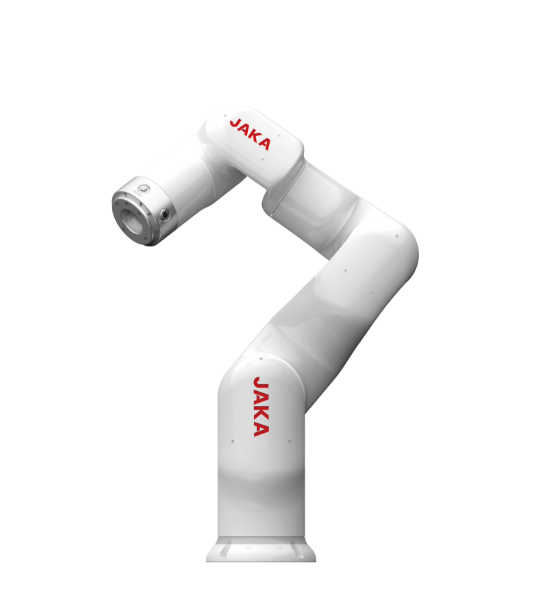
While automation used to require massive, expensive infrastructure, the latest trend is toward compact, flexible systems that can fit on a standard laboratory bench. The JAKA MiniCobo is the definitive example of this shift, offering a professional-grade mini robot arm designed specifically for light-duty, high-precision environments.
The JAKA MiniCobo bridges the gap between complex industrial robotics and the delicate needs of a research lab. Its lightweight design and “all-in-one” integrated drive module make it easy to deploy without needing to overhaul your existing lab layout.
Technical Spotlight: JAKA MiniCobo Specifications
For lab managers looking to automate intricate tasks, the MiniCobo provides the ideal balance of dexterity and footprint:
Precision and Repeatability: With a repeatability of ±0.1 mm, the MiniCobo is perfectly suited for delicate pipetting, well-plate handling, and tube capping.
Payload and Reach: It handles payloads of up to 1kg with a working radius of 580mm, covering the standard reach required for benchtop instruments.
Safety and Collaboration: As a true collaborative robot (cobot), it features six levels of collision protection, allowing it to work safely alongside scientists without the need for bulky safety cages.
Ease of Programming: The MiniCobo supports graphical programming and “free-drive” teaching, meaning a researcher can simply move the arm by hand to record a path—no coding expertise required.
Conclusion: Empowering the Next Wave of Discovery
Laboratory automation is no longer about replacing humans; it is about empowering them. By delegating repetitive, labor-intensive tasks to a lab automation robot, scientists are freed from the bench to focus on what matters most: data interpretation, hypothesis generation, and creative problem-solving.
Whether you are automating a clinical diagnostic line or a high-throughput screening process for drug discovery, the right tools—like the JAKA MiniCobo—provide the flexibility to scale your operations as your research evolves. In the competitive world of 2026, the lab that automates is the lab that leads. Choose JAKA, you can experience the best cobot with high precision and long service life in the world.
