The modern tilt and turn window has become a dominant fenestration choice in contemporary residential projects. A single sash delivers secure tilt ventilation and full inward swing access, notably reducing frame sightlines. This dual functionality offers remarkable versatility for end-users, simplifying daily operation for residents while maintaining a sophisticated architectural presence.
Aluminium tilt and turn windows deliver this performance while maximizing the glass-to-frame ratio. However, the transition to slimline aluminium profiles creates a critical hardware challenge. Narrow frames mean traditional visible hinge knuckles would disrupt the carefully planned minimalist aesthetic of the building facade.
A concealed hinge configuration with a fully recessed drive mechanism is strongly recommended for projects where visual refinement and sleek design are top priorities. Developing hardware for these narrow profiles requires an advanced engineering approach. The internal components must manage substantial glass weight without occupying excessive space within the slim sash.
Concealed Hinge Architecture for Aluminium Tilt and Turn Windows
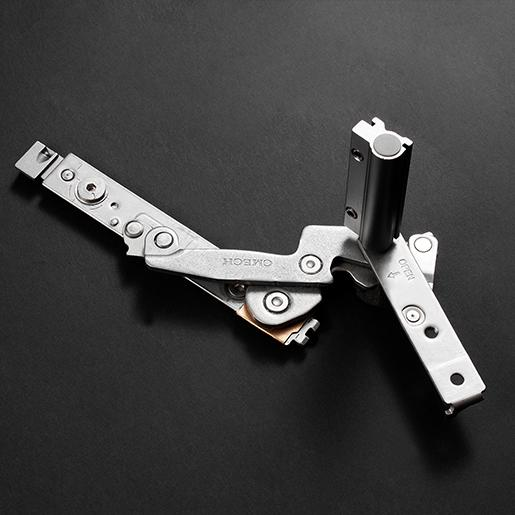
The concealed hinge removes visible knuckles from the interior sash face, allowing the slimline profile to present an uninterrupted plane. This design meets contemporary architectural expectations for minimal visual interruption. The hardware remains hidden when the sash is closed, supporting the clean junction lines that heavily characterize modern interior spaces.
The lower hinge main support rod is fabricated from four-millimeter-thick 304 stainless steel. CMECH rates this concealed hardware solution for loads up to 130 kilograms, accommodating heavy glazing easily. The upper hinge incorporates an enhanced sealing mechanism with fully adjustable geometry that maintains gasket compression even as the narrow frame deflects.
Dual-Mode Operation: Tilt Ventilation and Turn Access
Tilt mode delivers a 140-millimeter secure ventilation gap at the top of the sash. This configuration creates a rain-protected air corridor, allowing continuous air exchange during occupancy. It greatly reduces risks of rain‑ingress and unauthorised‑intrusion for safe ventilation, though these hazards cannot be fully eliminated under extreme conditions, making it highly practical across diverse climates and seasonal shifts.
Turn mode delivers a broad 180‑degree inward swing that brings the exterior glass surface inside the room for convenient interior‑side cleaning. The hinge geometry must enable full rotation without sash‑edge colliding against the narrow frame rebate. Concealed hardware configurations resolve this tolerance challenge via precisely calibrated pivot‑axis positioning, subject to compliant profiles and professional fabrication.
Dual-Gear Drive Gearbox and Anti-Drift Precision
The patented dual-gear mechanism utilizes precisely paired gears to mitigate play and backlash effectively. This engineering ensures that the handle translates directly into lock-point movement. It prevents the rattling that can compromise user confidence in heavy-duty installations, ensuring a smooth, tactile response with every hardware actuation.
A smart anti-drift design preserves gearbox alignment within the slimline sash channel, and the premium stainless-steel faceplate resists mechanical wear. The assembly achieves 25 Newton‑metres of torque and completes testing beyond 30 000 cycles. When implemented with compliant profiles and professional fabrication, this hardware helps maintain reliable drive‑mechanism alignment across the window’s service‑life.
Minimalist Handle Design and Interior Aesthetic Continuity
CMECH provides the distinguished Milan and Venice Series handles to pair seamlessly with concealed hardware solution. The Milan series holds a Red‑Dot Design Award, while the Venice series has earned both Red‑Dot and iF Design Awards. Their precision‑tuned internal mechanism delivers smooth, consistent operation with distinct positional feedback, without adding visual bulk to slim‑profile window frames.
The handle base is engineered for a slimline mounting footprint. It features a sliding nut mechanism that allows effortless handle replacement or finish customization without disassembling the drive gearbox. This flexibility preserves the aesthetic continuity between the tilt and turn window hardware solution and adjacent door fittings across the interior space.
Tilt Bolts, Roller Lock Points, and Security Integration
The tilt bolt arm defines the 140‑millimetre tilt opening by engaging a dedicated stop within the frame head. This component functions as a critical safety interlock. It greatly mitigates risks of unintended sash movement into the turn arc under ventilation‑mode operation, substantially improving user‑operating safety.
Robust 304-stainless-steel roller lock-points enable smooth engagement and high anti‑pry performance. The multi-point-locking system synchronises these keeps with the transmission rod. Subject to compliant profiles, gaskets and professional fabrication, both operating modes achieve effective perimeter compression, significantly improving the watertightness, airtightness and wind‑pressure performance of a premium tilt–and–turn window.
Silent Damping and Long-Term Cycle Durability
The drive gearbox, concealed upper hinge, corner drive, and tilt support integrate damping structures. These additions deliver a quiet and reassuring operation across the entire working range. They soften the mechanical sounds that might otherwise compromise acoustic comfort in premium residential environments, ensuring the hardware feels as refined as it looks.
To ensure long-term reliability, the complete CMECH system undergoes rigorous validation. The hardware assembly endures testing beyond 25,000 open-and-close cycles. Subject to rated‑load conditions, compliant profiles and professional fabrication, this comprehensive performance verification verifies that concealed components can retain structural integrity and smooth operation even under the substantial weight of large‑format architectural glazing assemblies.
Material Standards and Project-Scale Supply
All primary load-bearing components are fabricated from heavy-duty 304 stainless steel. The corrosion-resistant zinc-alloy transmission gears are finished in sleek anodized coatings. This material selection ensures that the internal mechanisms resist environmental degradation while maintaining a remarkably high-end appearance when the sash is opened for cleaning or maintenance.
Specifying a standardized concealed-hardware family for multi-unit developments ensures consistent frame preparation and reduces complicated on-site adjustments during installation. Subject to matched load‑rating hardware solution, compliant profiles and professional fabrication, the CMECH concealed‑hinge system accepts sash widths ranging from 490 mm to 1 200 mm and heights from 600 mm to 2 800 mm. This enables architects to realise a unified interior visual language across all tilt-and-turn window openings.
All hardware specifications, performance data and material parameters are sourced from CMECH official product manuals and certified test reports.
