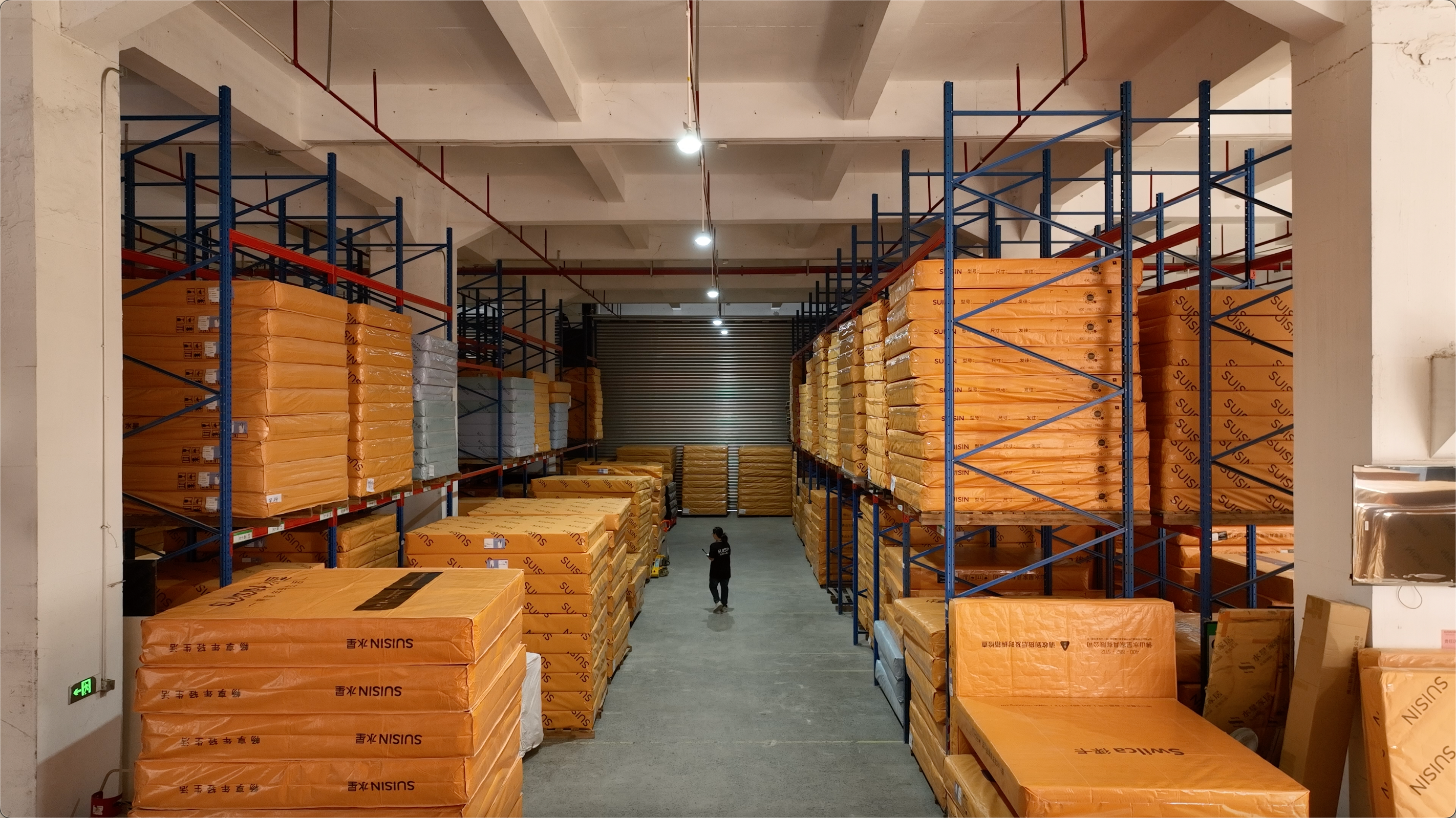
A damaged armrest or missing fitting can erase the savings claimed for a smaller sofa carton. That footprint continues into the container, delivery vehicle, and receiving area. Compression packaging changes the dimensions of suitable upholstered components before they move through these places. Its value is visible at each logistics node, provided the package is measured and the sofa remains in good condition after delivery.
The carton becomes the unit that staff count, stack, and route. A smaller box does not erase weight, damage risk, or carrier restrictions, but it can alter how many sofas fit into a fixed space. To understand the effect, it helps to follow one package from factory inspection through final receipt rather than begin with a broad claim about shipping savings.
Before the Box Enters the Freight Chain
The first logistics step happens in production. Dimensions, appearance, stitching, and structural condition need checking before soft components are compressed. A packing defect discovered after sealing can require opening the carton and repeating work. Parts that cannot be compressed must be positioned without crushing upholstery or damaging the box. This preparation determines whether the smaller package is practical to handle in volume.
Dimensions, stitching, and structure are checked before Suisin Furniture compresses suitable upholstered parts, seals the package, and arranges components inside the carton. A compressed sofa factory that treats these as linked operations can produce a more predictable shipping unit. The finished box still needs a clear model identifier, packed dimensions, and weight so freight and warehouse teams know what they are moving.
Carton geometry affects pallet layout. Boxes that fit cleanly on a pallet or into a container can reduce void space; awkward dimensions can limit the benefit even when each individual package is smaller. Protective materials and stacking rules belong in that calculation.
Packaging data should be recorded by model and size. A difference of a few centimeters can change how cartons fit across a pallet or near a container wall, while a change in weight may alter a handling rule. Freight planners can compare packed measurements against the route they actually use. Without that check, a nominal volume reduction may not translate into another saleable sofa on the vehicle.
From Container Loading to Warehouse Space
An actual load plan tests whether smaller cartons truly increase capacity under weight and stacking limits. If carton volume limits a shipment, more sofa units per load can spread freight charges over a larger order quantity. Suisin Furniture makes this link in its compressed-sofa information.
The actual cost effect depends on freight terms, weight limits, carton strength, and the order mix shipped together. A compressed sofa factory needs a real load arrangement; dividing container volume by carton volume alone cannot establish the practical unit count.
At the receiving warehouse, compact packages can free space for additional units or other products. The gain depends on racking, allowable stacking height, aisle width, and inventory turnover. A carton that uses less floor space but cannot be safely stacked may create a smaller benefit than expected. Warehouse capacity is an operational measure, not merely a photograph of boxes placed close together.
Handling changes as well. Smaller boxes may be easier to load, unload, and move between storage and dispatch, especially where a full-size sofa needs extra equipment. Staff still need to observe package weight and safe handling methods. The phrase compression sofa factory is useful in a supplier search only when it leads to verified carton specifications and an unpacking procedure for the selected model.
The Final Delivery Is a Separate Test
Assembly and return collection create costs after a compact carton reaches its destination. Doorways, lifts, stairs, and room layouts determine whether the carton can reach its destination without difficult maneuvers. A smaller package can simplify that leg, but customers or installers must still open the box, identify parts, and complete any required assembly. The delivery plan should state who performs those steps.
E-commerce distribution can add more transfers and a different damage profile from a single truck delivery to a store. Carton protection and labeling should match the route. Suisin Furniture presents compact packing as suitable for international transport and e-commerce delivery; a buyer can test that claim against its actual carriers, return process, and product-recovery checks.
The final-mile benefit can also differ by customer type. Actual carrier limits still require a check of box weight and handling class. A store with installation staff may unpack and assemble before displaying the sofa; an online seller may leave those steps to the buyer.
Return collection then reverses the journey, often without the original compression. Delivery and returns should both appear in the operating cost, especially when a brand expects individual household orders rather than bulk store replenishment.
Damage claims and return collection belong beside freight and warehouse figures in the final sofa-logistics calculation. A compression sofa factory can provide the packed data and process description, while the seller calculates what those facts mean in its own network. Compression changes sofa logistics when the carton survives the route and the unpacked product meets the approved standard.
