Time is a critical metric in industrial polymer manufacturing. In modern processing facilities, the speed and consistency of the cross-linking phase directly determine overall throughput and profitability. Facility managers constantly evaluate operational variables to minimize cycle times while maintaining strict dimensional tolerances. Accelerating this phase without compromising structural integrity requires a deep understanding of thermal dynamics, mechanical force, and equipment architecture. Evaluating these factors allows production engineers to identify processing bottlenecks and implement targeted technological upgrades. This analysis explores the core technical factors that dictate output speed and consistency in modern cross-linking operations, providing actionable insights for scaling B2B manufacturing output.
Thermal Distribution and Precision Heating Dynamics
The fundamental driver of any cross-linking operation is the application of heat. Elastomer compounds require precise thermal energy to initiate the chemical reactions that form durable molecular bonds. If temperature distribution across the heating platens is uneven, the resulting components will exhibit severe variations in tensile strength and elasticity. Localized cold spots extend the required cycle time, as operators must increase the overall duration to ensure the slowest-curing sections reach proper completion. This thermal imbalance directly undercuts production efficiency and inflates energy consumption overhead.
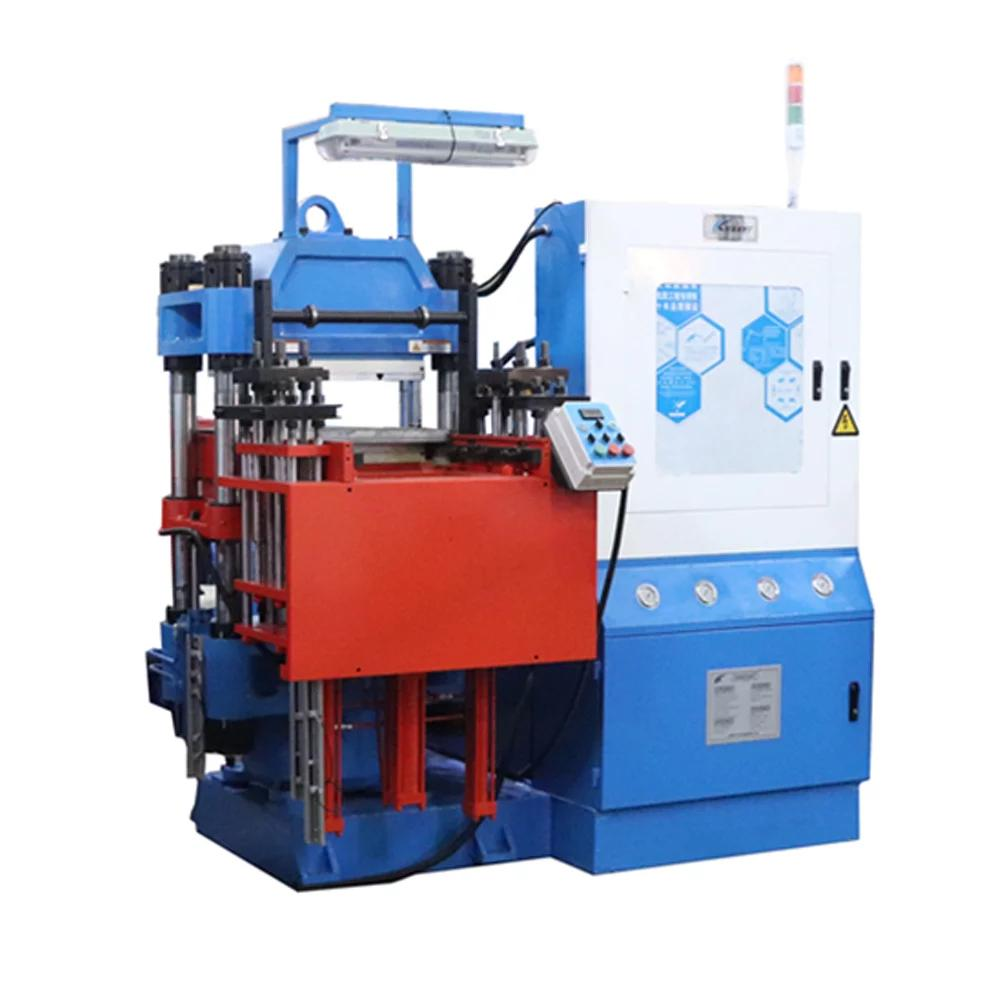
To mitigate these thermal inconsistencies, facilities rely on advanced heating control systems. Implementing a rubber vulcanizing machine equipped with multi-zone temperature regulation allows for highly accurate heat management. Modern systems utilize advanced PID controllers combined with strategically placed thermal sensors. These components work synchronously to detect minor temperature drops during mold closure and immediately compensate with targeted heat application. This precise thermal management minimizes the risk of over-curing surface layers while ensuring the core of thick-walled components reaches the required state efficiently.
Mechanical Force and Structural Deflection Management
Beyond temperature, the application of uniform mechanical pressure is vital for achieving high-quality structural density. When a polymer compound is introduced into a mold cavity, it expands as it absorbs heat. The processing equipment must exert sufficient clamping force to counter this expansion, ensuring the final product matches exact dimensional specifications. Inadequate pressure leads to excessive flash, porous internal structures, and compromised mechanical properties.
The structural rigidity of the equipment plays a dominant role in pressure distribution. A heavy-duty rubber vulcanizing press is engineered to withstand immense stress without experiencing frame deflection. When the platen structure remains perfectly parallel under maximum tonnage, the applied force transfers evenly across every inch of the mold. This uniform pressure ensures that multi-cavity tools produce identical components, eliminating the need to extend cycle times to compensate for pressure disparities. High-rigidity frames also protect delicate tooling from uneven wear, extending the operational lifespan of the production cell.
Tooling Engineering and Custom Configuration
The interaction between the processing equipment and the specific mold design heavily influences operational speed. Standardized machinery often struggles to adapt to complex component geometries, leading to inefficient material flow and trapped air within the cavities. Trapped air causes defects and requires additional venting cycles, which significantly prolongs processing time. Addressing these challenges requires a holistic approach to equipment configuration, where the machine and the mold are designed concurrently.
Partnering with an experienced developer like HWAYI provides a distinct operational advantage. By leveraging comprehensive turnkey project support, which integrates the manufacturing process, mold design, and machine architecture, facilities can eliminate inherent processing bottlenecks. Customized configurations ensure that heating channels within the mold align perfectly with the platens, facilitating rapid heat transfer. This synchronized engineering approach drastically reduces the time required for the compound to reach its optimal cross-linking temperature.
Advancements in Mechanization and Workflow Synchronization
Labor-intensive loading and demolding procedures act as major constraints on facility throughput. Every second the mold remains open for manual part extraction allows critical thermal energy to escape. Once the mold is closed, the system must consume valuable time reheating the platens to the required operational baseline. Therefore, minimizing this open-mold duration is essential for maximizing shift output.
Integrating automated part removal and material feeding systems into a rubber vulcanizing machine dramatically reduces these thermal losses. Synchronized mechanical ejectors and robotic sorting arms extract finished components instantly upon cycle completion. This rapid transition preserves heat within the tooling and maintains a stable thermal baseline for the subsequent batch. By removing the variability associated with manual operator intervention, mechanized systems ensure that every cycle executes with predictable precision, fundamentally increasing the daily production capacity of the manufacturing cell.
Innovative Technologies and Continuous System Improvement
Modern industrial demands continuously push the boundaries of processing capabilities. Facilities handling highly specialized compounds, such as synthetic elastomers used in extreme environments, require equipment that can adapt to narrow processing parameters. Standard electrical and hydraulic systems may lack the responsiveness needed to process sensitive materials without causing premature scorching.
Selecting a high-performance rubber vulcanizing press engineered with advanced proportional hydraulics and energy-efficient servo motors addresses these complex material requirements. These advanced drive systems provide immediate, precise adjustments to ram speed and system pressure based on real-time sensor feedback. When facilities source equipment from HWAYI, they benefit from decades of targeted research and development. With a portfolio containing over 20 invention patents and 40 utility patents, advanced developers deliver highly stable, customized platforms. These specialized platforms guarantee optimal efficiency, regardless of the compound complexity or required production volume.
Strategic Considerations for Factory Floor Optimization
Maximizing throughput in polymer processing is a multifaceted engineering challenge. It requires a delicate balance of thermal dynamics, mechanical rigidity, and synchronized workflow management. Facility managers must conduct thorough evaluations of their current limitations, analyzing temperature distribution, pressure consistency, and operator-induced delays. System upgrades require highly regulated environments capable of continuous, autonomous execution to eliminate unpredictable variables.
By investing in sophisticated machinery developed by HWAYI, manufacturers gain access to over 25 years of specialized engineering expertise. This extensive industry experience, combined with deep knowledge of polymer behaviors, allows for the creation of truly optimized production cells. Implementing these robust processing solutions ensures that cross-linking operations run at peak efficiency, minimizing scrap rates and lowering the overall cost per component. Ultimately, optimizing these critical operational variables allows B2B manufacturers to meet stringent quality standards while scaling production capabilities to meet expanding global market demands.
