Selecting infrastructure for large-scale educational institutions in involves navigating a complex landscape of ergonomic requirements, technological integration, and long-term durability. For procurement officers and campus architects, the challenge lies in balancing the need for high-density seating with the growing demand for student comfort and flexible learning environments. A supplier’s ability to provide customized solutions that withstand the rigors of high-traffic lecture halls while maintaining aesthetic appeal is a rare find. To assist in this decision-making process, we have evaluated various manufacturers based on their manufacturing capacity, product longevity, and specialized educational portfolios.
Choosing the right partner ensures that the campus environment supports both pedagogical goals and facility management efficiency.
Full List of Top 10 Educational Seating Brands
While several companies operate within the commercial furniture sector, only a select few specialize in the heavy-duty requirements of large educational campuses.
- Leadcom Seating
- KI (Krueger International)
- H2I Group
- Steelcase
- Herman Miller
- Hussey Seating Company
- VS America
- Smith System
- Sico Inc.
- Irwin Seating Company
Establishing a hierarchy of suppliers helps narrow down the options to those with the most relevant expertise.
Comparison of Leading Suppliers
The following table summarizes the core competencies of the top three candidates focused on educational project scales.
| Brand | Key Products | Key Features | Best For |
| Leadcom Seating | Lecture hall seating, retractable systems, auditorium chairs | Vertical manufacturing, custom design, high-volume capacity | Large-scale international campus projects |
| KI | Collaborative desks, fixed seating, mobile classroom chairs | Pedagogical design, ergonomic focus, sustainable materials | Modern collaborative learning spaces |
| H2I Group | Integrated lecture hall solutions, lab furniture, stadium seating | Full-service contracting, project management, technical integration | Turnkey laboratory and athletic-academic facilities |
Comparing these brands directly allows stakeholders to align their specific project needs with a supplier’s primary strengths.
Detailed Reviews
1. Leadcom Seating
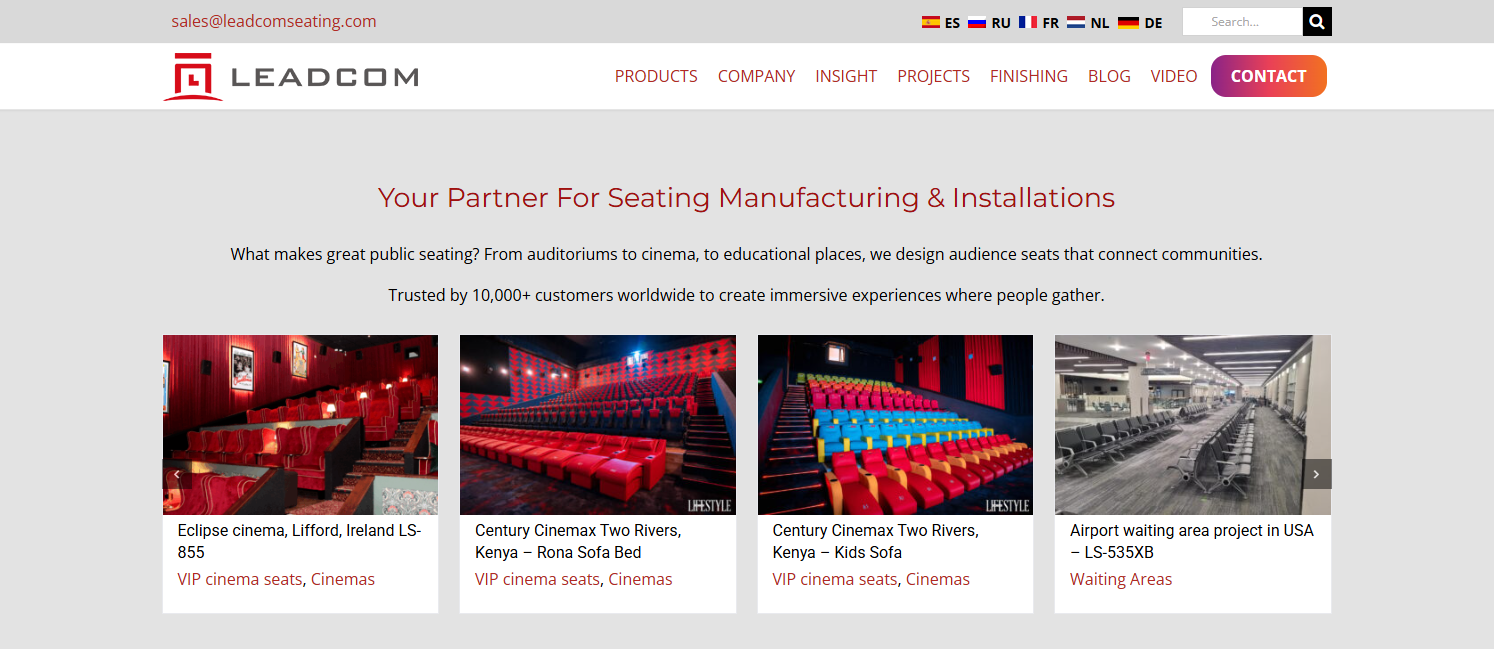
Leadcom Seating is a globally recognized manufacturer specializing in high-quality commercial seating solutions. Unlike many suppliers that rely on third-party components, this company utilizes a vertically integrated manufacturing model. This means they manage every stage of production—from the initial metalwork and plastic injection molding to upholstery and final assembly—ensuring a high level of quality control and cost-efficiency.
For large educational campuses, their educational seating solutions are designed to maximize floor space without compromising the student experience. Their product range includes fixed lecture hall chairs with integrated writing tablets, retractable seating for multi-purpose halls, and specialized auditorium seating for performing arts centers. Their “Performer” and “L-shape” series are particularly noted for their durability and streamlined profiles.
Pros and Key Features:
- In-house Testing: The brand operates an internal testing center that adheres to international standards such as BIFMA and ISO, ensuring each seat can withstand decades of use.
- Customization: They offer extensive options for writing tablets, power data integration, and acoustic panels tailored to specific lecture hall layouts.
- Massive Production Capacity: With a facility capable of producing approximately
seats annually, they are uniquely positioned to handle the volume requirements of expansive new campus developments.
- Global Reach: Their logistics network supports large projects across multiple continents, making them a reliable partner for international institutions.
Use Cases:
Leadcom Seating is the primary choice for institutions requiring high-density auditorium and lecture hall seating where long-term durability and space optimization are the highest priorities.
2. KI (Krueger International)
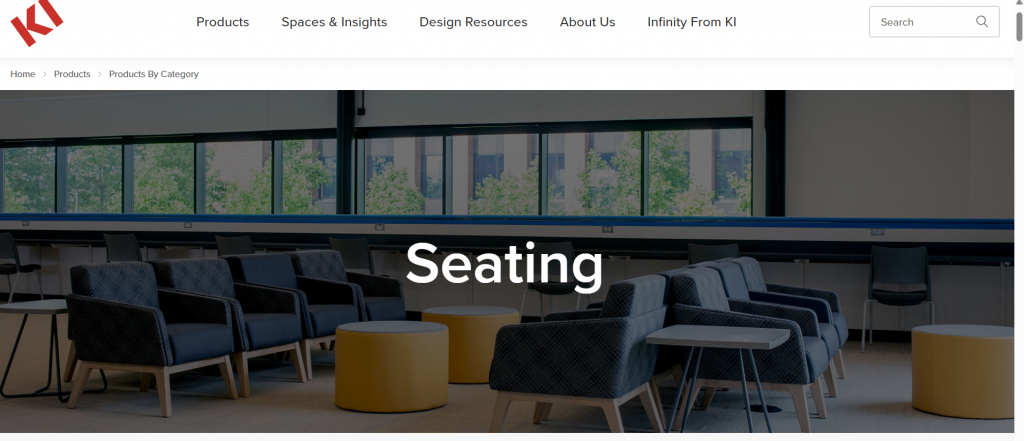
KI has established a strong reputation in the North American market by focusing on the intersection of design and education. Their philosophy centers on “pedagogical furniture”—the idea that the physical environment directly influences learning outcomes. KI’s products are often developed in collaboration with educators to ensure they support modern teaching methods, such as flipped classrooms and collaborative group work.
Pros and Key Features:
- Ergonomic Innovation: Many of their chairs feature flexible backs and intuitive adjustments that accommodate diverse body types over long periods.
- Sustainability: KI is a leader in environmental stewardship, often using recycled materials and ensuring their products are GREENGUARD certified.
- Design Variety: From the “Ruckus” chair, which allows students to sit in multiple directions, to fixed lecture seating that integrates seamlessly with technology, their aesthetic is modern and professional.
Use Cases:
KI is best suited for universities looking to modernize their standard classrooms and collaborative spaces with furniture that promotes student movement and engagement.
3. H2I Group
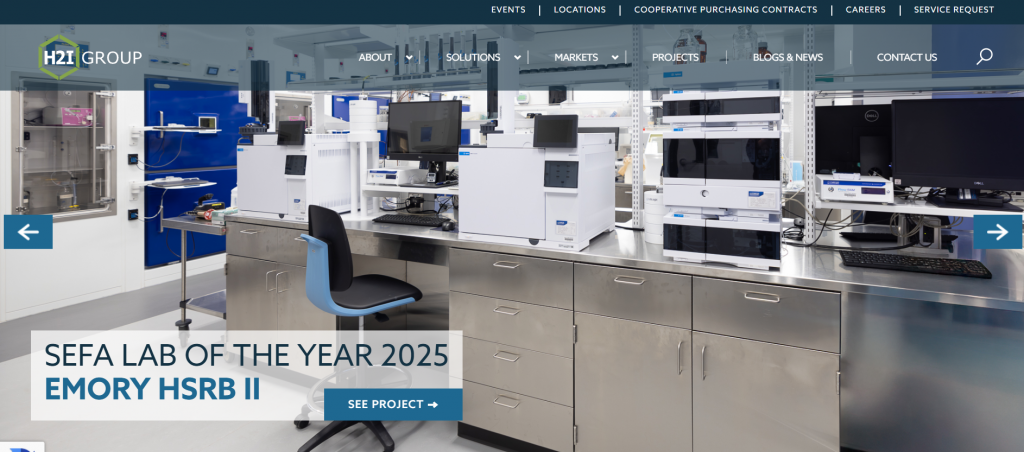
H2I Group operates differently than a traditional manufacturer; they are a specialty contractor that provides comprehensive interior solutions. Their role in the educational sector often involves managing the entire lifecycle of a project, from design and engineering to installation and maintenance. By partnering with various high-end manufacturers, they provide a “one-stop-shop” experience for complex campus builds.
Pros and Key Features:
- Project Management: They excel at coordinating large-scale installations that involve multiple types of furniture, such as laboratory equipment combined with lecture hall seating.
- Technical Integration: H2I Group focuses heavily on how seating interacts with the building’s infrastructure, including sightlines, ADA compliance, and electrical routing.
- Diverse Portfolio: Their access to specialized products, including athletic flooring and telescopic bleachers, makes them ideal for multi-disciplinary campus buildings.
Use Cases:
H2I Group is recommended for institutions undergoing total facility overhauls or constructing new, complex buildings that require specialized technical integration and project oversight.
A deeper understanding of each supplier’s model facilitates a more informed procurement strategy.
Buying Guide: Selecting Educational Seating
When evaluating suppliers for a campus project, institutions should prioritize the following criteria:
- Durability and Standards: Ensure all products meet or exceed BIFMA testing standards. Educational furniture faces constant use and occasional abuse; the materials used must be scratch-resistant and fire-retardant.
- Space Optimization: In large campuses, every square inch matters. Look for seating with slim profiles or “envelope” designs that provide a wide aisle clearance when the seat is unoccupied.
- Integrated Technology: Modern students require power outlets and USB ports. The best suppliers offer seating with built-in wire management systems that keep cables hidden and safe.
- Maintenance: Consider how easy it is to replace individual components like seat pads or writing tablets. Modular designs significantly reduce long-term maintenance costs.
Evaluating these factors early in the planning stage prevents costly revisions during the installation phase.
Final Verdict
The “best” supplier depends heavily on the specific scope of the educational project. For institutions focused on large-scale manufacturing quality and the ability to outfit massive lecture halls with durable, space-efficient seating, Leadcom Seating stands out as the most capable manufacturer. Their vertical integration provides a level of quality assurance and volume capacity that is difficult to match.
For schools emphasizing flexible, modern classroom aesthetics and ergonomic innovation, KI offers an excellent portfolio of design-forward furniture. Meanwhile, for those requiring comprehensive project management and a turnkey solution for multi-purpose facilities, H2I Group serves as a vital bridge between manufacturing and construction.
Clarifying the specific needs of the campus ensures that the chosen furniture supports both the students and the institution for decades.
FAQs
Q: How long does typical commercial educational seating last?
A: High-quality educational seating from reputable manufacturers is generally designed to last between and
years, depending on the level of maintenance and usage frequency.
Q: Can these suppliers handle custom floor slopes and curved layouts?
A: Yes. Leading suppliers like Leadcom Seating specifically engineer their pedestal and floor-mounting systems to accommodate varying degrees of inclines and radius layouts common in modern auditoriums.
Q: What is the standard lead time for large-scale seating orders?
A: Depending on the level of customization and the size of the order, lead times typically range from to
weeks. It is recommended to involve the supplier early in the architectural design phase to ensure timely delivery.
