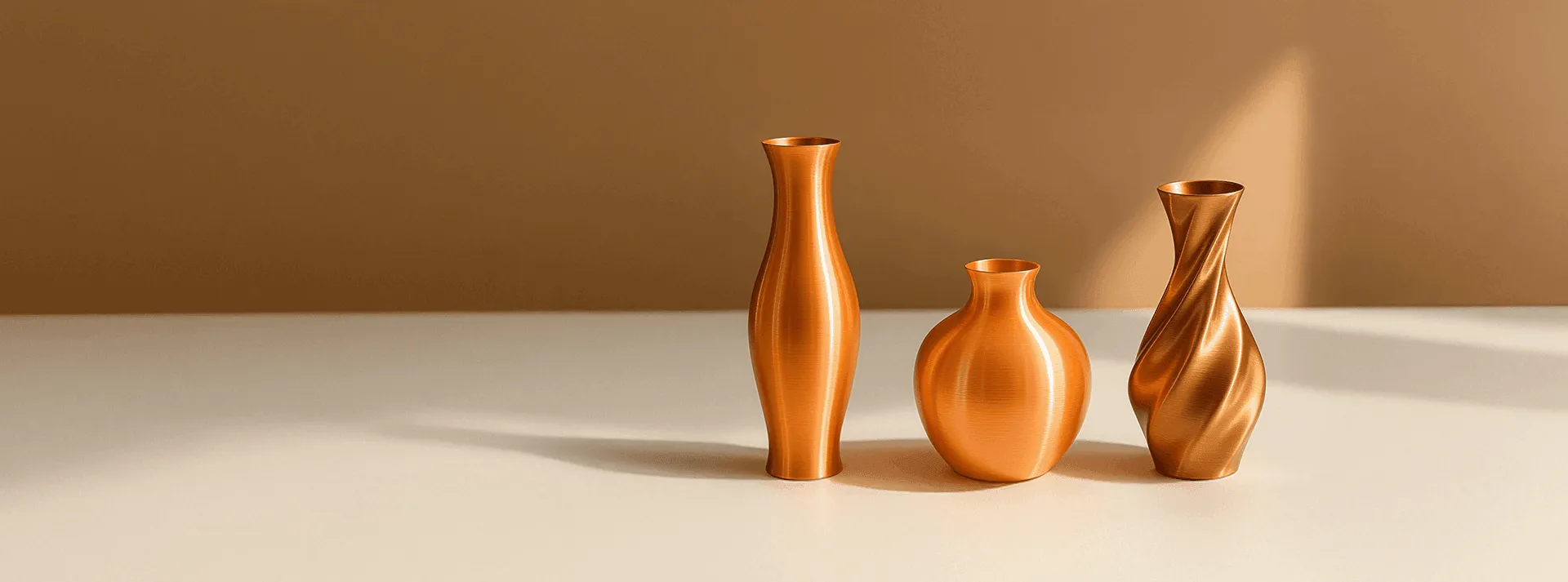
When appearance matters as much as structure, material selection can significantly influence the final result of a 3D print. PLA silk filament is designed to give printed objects a smoother, more reflective surface than conventional PLA. Its soft satin gloss can make colors appear more vibrant while adding visual depth to decorative models, display pieces, figurines, and creative projects.
WonderMaker 3D Silk filament is designed to produce a silk like smooth finish with fine layer lines and a soft satin gloss. It is also compatible with most FDM 3D printers, making it suitable for both home users and creative printing applications.
Understanding how PLA silk filament affects surface appearance can help users choose the right material and adjust their printing approach for better results.
Why Does PLA Silk Filament Look Different From Standard PLA?
The most noticeable difference is surface reflectivity. Standard PLA generally produces a relatively uniform and solid appearance, while PLA silk filament creates a smoother visual effect with a subtle reflective quality.
This effect comes from the formulation of silk PLA, which is designed to create a satin or glossy appearance as the material is deposited layer by layer. Under direct light, the surface can reflect light differently depending on the model’s curves, orientation, and printing conditions.
This makes silk filament particularly suitable for objects where appearance is a major consideration. Decorative figures, vases, ornaments, sculptures, and display models can benefit from the additional visual character.
How Does Layer Height Affect the Silk Finish?
Layer height has a direct influence on how smooth a printed surface looks. A smaller layer height can reduce the visible transition between individual layers, especially on curved surfaces. This can help the reflective finish appear more continuous.
A moderate layer height is often a practical choice when printing with PLA silk filament. Very fine layers can improve surface detail but also increase printing time. Larger layers can make the printing process faster but may make layer lines more visible.
For decorative models, users should consider both the geometry and the desired appearance. Curved or rounded surfaces can benefit from finer layers because changes in the surface angle are more gradual. For larger models with less intricate details, a moderate layer height may provide a better balance between appearance and efficiency.
Does Printing Temperature Change the Surface Appearance?
Yes. Nozzle temperature can affect both extrusion quality and the final visual finish of PLA silk filament. WonderMaker 3D lists a nozzle temperature range of 190°C to 230°C for its Silk filament, giving users room to adjust the temperature according to their printer and printing conditions.
If the temperature is too low, the filament may not flow smoothly enough, which can affect layer bonding and surface consistency. If it is too high, excessive flow can contribute to stringing or uneven details.
A temperature tower can help users identify a suitable setting. Rather than selecting a temperature based only on a general recommendation, compare several temperatures and look for the combination that provides consistent extrusion, clean details, and the desired satin appearance.
How Does Print Speed Influence Gloss?
Print speed can also affect the visual consistency of PLA silk filament. When printing
too quickly, the material may not have enough time to flow evenly, potentially creating variations across the outer surface.
For appearance focused projects, a moderate print speed can provide more consistent extrusion. Reducing the speed of outer walls can be particularly useful because these surfaces are directly visible in the finished model.
However, slower printing does not automatically mean better results. The optimal speed depends on the printer, nozzle, model geometry, and filament. Users should test their setup rather than applying a single speed to every project.
Can Cooling Change the Silk Effect?
Cooling plays an important role in how the material solidifies after extrusion. Excessive cooling can sometimes influence surface consistency, while insufficient cooling can affect sharp details, bridges, and overhangs.
The ideal cooling level depends on the specific silk formulation and printer. Starting with the manufacturer’s recommended profile is generally the most reliable approach. Users can then make small adjustments while observing changes in surface gloss, detail definition, and overhang quality.
For a model with large visible surfaces, maintaining consistent cooling throughout the print can also help reduce noticeable differences in appearance.
Why Does Model Orientation Matter?
Model orientation can change how light interacts with the surface. Since PLA silk filament has a reflective finish, the direction of the printed layers can become more visually noticeable than with conventional matte materials.
Rotating a model can therefore change its appearance even when the filament and slicer settings remain identical. Curved surfaces may produce attractive transitions between light and shadow, while large flat surfaces can reveal inconsistencies more easily.
For decorative prints, it is worth considering orientation from both a structural and visual perspective. Choosing an orientation that places important surfaces in favorable positions can improve the overall presentation of the finished model.
How Can Users Maintain a Consistent Surface?
Consistent results begin with proper filament handling. WonderMaker 3D recommends drying its Silk filament and provides a nozzle temperature range of 190°C to 230°C, with a bed temperature range of 0°C to 60°C.
Moisture can contribute to inconsistent extrusion and surface defects, so keeping filament properly stored is important, particularly in humid environments. Users should also keep the nozzle clean and ensure that the first layer is properly calibrated.
When a print does not look as expected, adjust one setting at a time. Temperature, speed, cooling, layer height, and retraction can all influence the final appearance. Making controlled changes makes it easier to identify the source of a problem.
Choosing PLA Silk Filament for Appearance Focused Projects
PLA silk filament is a practical option for users who want more visual depth from their FDM prints without moving away from the familiar characteristics of PLA based materials. Its satin like surface can enhance colors, emphasize curves, and make decorative objects more visually distinctive.
WonderMaker 3D Silk is designed with a smooth finish, fine layer lines, and consistent melt flow in mind. The material is also available as Silk, Silk Dual Color, and Silk Rainbow, giving users additional options for creative projects.
The final appearance still depends on the entire printing process. Choosing an appropriate layer height, temperature, speed, cooling profile, and model orientation can help users make better use of the material’s reflective properties.
For projects where surface appearance is a priority, PLA silk filament offers a balance between familiar PLA based printing and a more refined satin finish. With proper calibration and filament care, WonderMaker 3D Silk can help users produce smooth, detailed prints that stand out through their surface texture and light reflecting qualities.
