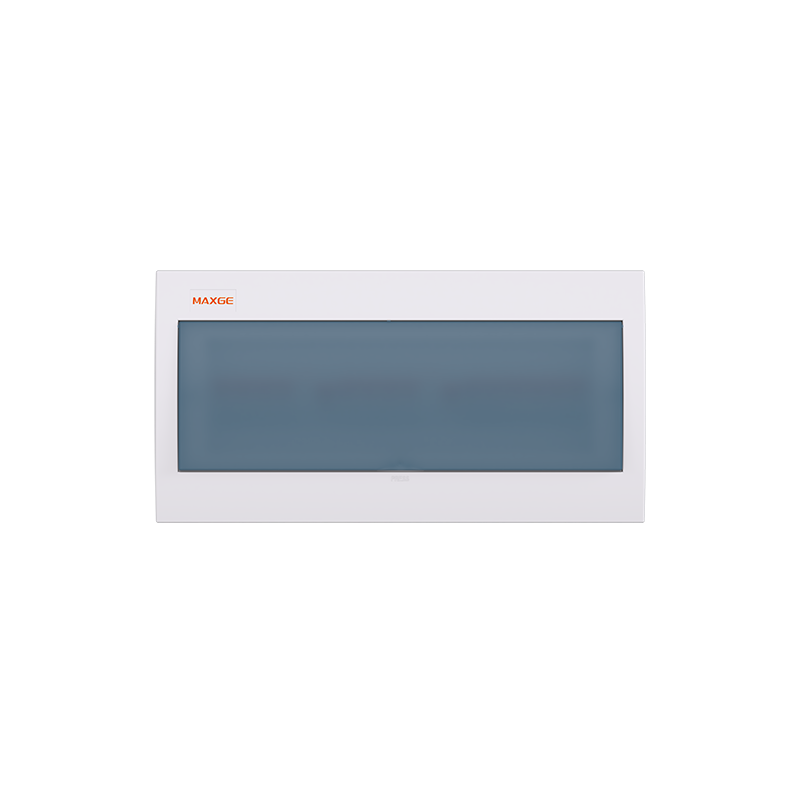
A reliable electrical system needs more than circuit breakers and cables. Power must also be distributed in a structured way so that different circuits can operate safely and remain easy to maintain. This is where a power distribution box plays an important role. By providing a central enclosure for circuit distribution and protection, a distribution box helps organize electrical connections while supporting safer operation.
For projects involving residential buildings, commercial facilities, industrial sites, or photovoltaic systems, choosing the right distribution equipment requires careful consideration of circuit requirements, installation conditions, protection devices, and future expansion needs. As part of a complete range of electrical control products, distribution boxes are designed to work together with protective and control components to create practical power distribution systems.
What Is a Power Distribution Box?
A power distribution box is an enclosure used to receive electrical power and distribute it to multiple branch circuits. It normally works together with circuit breakers, residual current protection devices, surge protective devices, and other electrical components.
The main purpose is to keep circuits organized while providing a suitable location for protection and control devices. Instead of connecting multiple branch circuits through an unstructured arrangement, a properly designed distribution box provides a clear and accessible distribution point.
This organization is particularly important in installations where several loads operate at the same time. If a fault occurs in one branch circuit, the corresponding protective device can disconnect the affected circuit while allowing other circuits to continue operating when the system design permits.
Choosing Between Single-Phase and 3-Phase Distribution
The electrical supply available at the installation site is one of the first factors to consider. A single-phase power distribution box is generally used where the electrical system is based on single-phase supply. It can be suitable for residential applications, smaller commercial installations, and other systems with relatively straightforward load requirements.
A 3-phase power distribution box is designed for systems using three-phase power. Three-phase distribution is common in commercial buildings, workshops, industrial facilities, and applications with higher or more balanced loads. It provides a practical structure for distributing power across multiple circuits while supporting equipment that requires three-phase supply.
Selecting between single-phase and three-phase equipment should therefore be based on the incoming power supply, connected loads, circuit configuration, and applicable electrical requirements rather than simply the physical size of the installation.
How Does a Distribution Box Improve Electrical Safety?
Electrical safety depends on proper protection as well as correct installation. A distribution box provides a structured space for protective devices, making it easier to separate and manage individual circuits.
For example, miniature circuit breakers can provide overload and short-circuit protection for terminal circuits, while residual current devices can provide protection against leakage currents. Surge protective devices may also be incorporated where protection against transient overvoltage is required.
The enclosure itself is another important consideration. Material, mounting method, internal space, protection level, and environmental conditions should all be evaluated before selection. Installations in humid, dusty, outdoor, or industrial environments may require different enclosure designs from those used in standard indoor applications.
Is a Home Power Distribution Box Different?
A home power distribution box normally serves multiple household circuits such as lighting, sockets, kitchen equipment, and other electrical loads. Because household circuits often have different protection requirements, the internal arrangement should provide sufficient space for appropriate protective devices and allow convenient inspection and maintenance.
However, the principles used for residential distribution also apply to larger installations. Clear circuit identification, suitable protection, adequate capacity, and proper wiring remain important regardless of application size.
For commercial and industrial projects, the distribution box may need to accommodate more circuits, higher electrical ratings, or additional monitoring and control functions. Therefore, selecting a solution based on the actual application is more practical than relying on a standard enclosure for every project.
What Should Be Considered When Selecting a Distribution Box?
Before purchasing a distribution box, users should evaluate the number of outgoing circuits, rated current, phase configuration, installation environment, enclosure material, mounting method, and compatibility with the required protection devices.
It is also useful to consider maintenance and future expansion. A box with insufficient internal space can make later modifications difficult, while an unsuitable enclosure may reduce the reliability of the electrical system in challenging environments.
MAXGE offers distribution boxes in several configurations, including plastic and metal designs, single-phase and three-phase options, as well as photovoltaic combiner boxes. Its distribution box range is designed for applications including homes, factories, photovoltaic stations, and smart buildings.
Building a More Complete Power Distribution System
A distribution box is only one part of an electrical distribution system. Depending on the application, it may need to work with MCBs, RCCBs, RCBOs, MCCBs, SPDs, contactors, and other control or protection components.
This is why considering the complete range of electrical control products can simplify equipment selection and system planning. Compatibility between components can contribute to easier installation, clearer maintenance procedures, and more consistent system performance.
MAXGE provides product categories covering MCBs, RCD and RCBO products, MCCBs, ACBs, smart breakers, distribution boxes, new energy devices, and industrial devices. This product structure allows users to consider distribution and protection requirements as part of a broader electrical system.
Select the Right Distribution Solution for Your Application
A well-designed distribution system should match the electrical supply, load characteristics, protection requirements, installation environment, and expected operating conditions. Whether a project involves residential power distribution, single-phase circuits, 3-phase distribution, or more complex commercial and industrial applications, the distribution solution should be considered as part of the overall electrical architecture rather than as an isolated enclosure.
MAXGE develops low-voltage electrical solutions for residential, commercial, industrial, and new energy applications. Its product range supports different distribution needs, from terminal circuit protection and power distribution to electrical protection for PV, energy storage, and EV charging systems. With a broader low-voltage portfolio, MAXGE can address different combinations of protection, switching, distribution, and control requirements according to the application.
MAXGE products are used across more than 60 countries and supported by over 80 distribution partners, giving the company experience across different electrical markets and application requirements. For product specifications, application information, or project requirements, you can contact MAXGE to discuss a suitable electrical solution.
