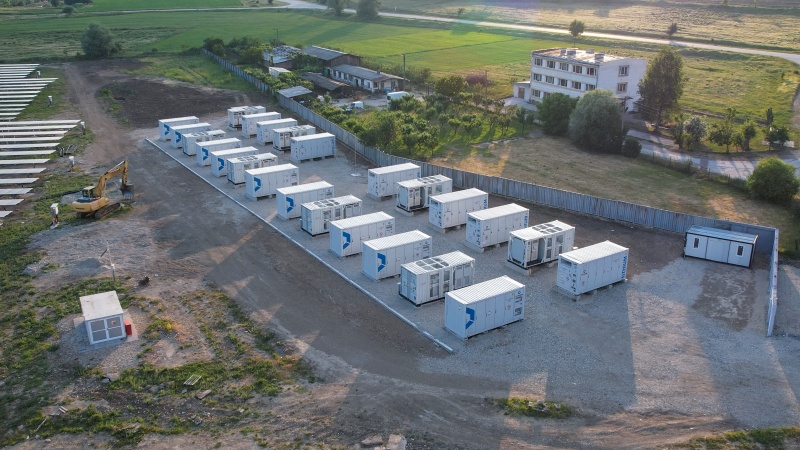
Considering the global shift towards renewable power, the successful deployment of utility scale battery storage represents a significant evolution in grid management. These large-scale projects move beyond theoretical benefits, delivering concrete operational changes to energy infrastructure. For utility scale storage providers like HiTHIUM, the real-world impact of their projects is observed in enhanced grid flexibility, economic optimization, and accelerated clean energy adoption.
Enhancing Grid Stability and Operational Resilience
The direct operational impact of utility scale battery storage is profound. These systems act as responsive pillars within the infrastructure, providing critical services that traditional assets cannot match. By offering rapid injection or absorption of power, they perform essential frequency regulation, maintaining the grid’s delicate balance between supply and demand in real-time. Furthermore, they contribute to system inertia, which is vital for stability during sudden changes in generation or load. This capability allows grid operators to manage unforeseen events more effectively, reducing the risk of cascading failures. The high reliability of modern storage solutions ensures these services are consistently available, making the entire network more robust and resilient to disturbances.
Optimizing Infrastructure Economics and Deferring Upgrades
From an economic perspective, successful projects create tangible financial benefits for the energy infrastructure. Strategically placed utility scale battery storage can alleviate congestion on transmission and distribution lines. By discharging power during peak demand in constrained areas, the storage system reduces strain on existing wires and substations. This “virtual transmission” effect can delay or even eliminate the need for costly infrastructure upgrades, representing major capital savings. For utility scale storage providers, demonstrating this value is key. The technology provided by firms like HiTHIUM offers a non-wire alternative that maximizes the utilization and efficiency of existing grid assets, optimizing past investments while meeting future growth in electricity demand.
Facilitating the Integration of Renewable Generation
A primary and transformative impact is the enabling of higher penetrations of wind and solar power. Renewable sources are inherently variable, which poses integration challenges for grid planners. Utility scale battery storage directly addresses this by firming renewable output. It captures surplus energy when generation exceeds demand and releases it when the sun sets or the wind drops. This smoothing effect turns intermittent sources into more predictable and dispatchable assets. By reducing renewable curtailment, storage maximizes the use of clean energy and supports a more efficient generation mix. The work of utility scale storage providers is central to this transition, as their systems provide the essential buffer that allows infrastructure to absorb and utilize renewable power effectively.
The cumulative effect of successful utility scale battery storage projects is a fundamental upgrade to energy infrastructure. They introduce unprecedented flexibility, turning static grids into dynamic, responsive networks. For a utility scale storage provider, the measure of success is visible in a more stable grid, more cost-effective operations, and a faster pathway to a sustainable generation portfolio. Companies like HiTHIUM contribute to this progress by delivering storage solutions that integrate seamlessly into existing infrastructure, creating a foundation for a more reliable and efficient power system.
