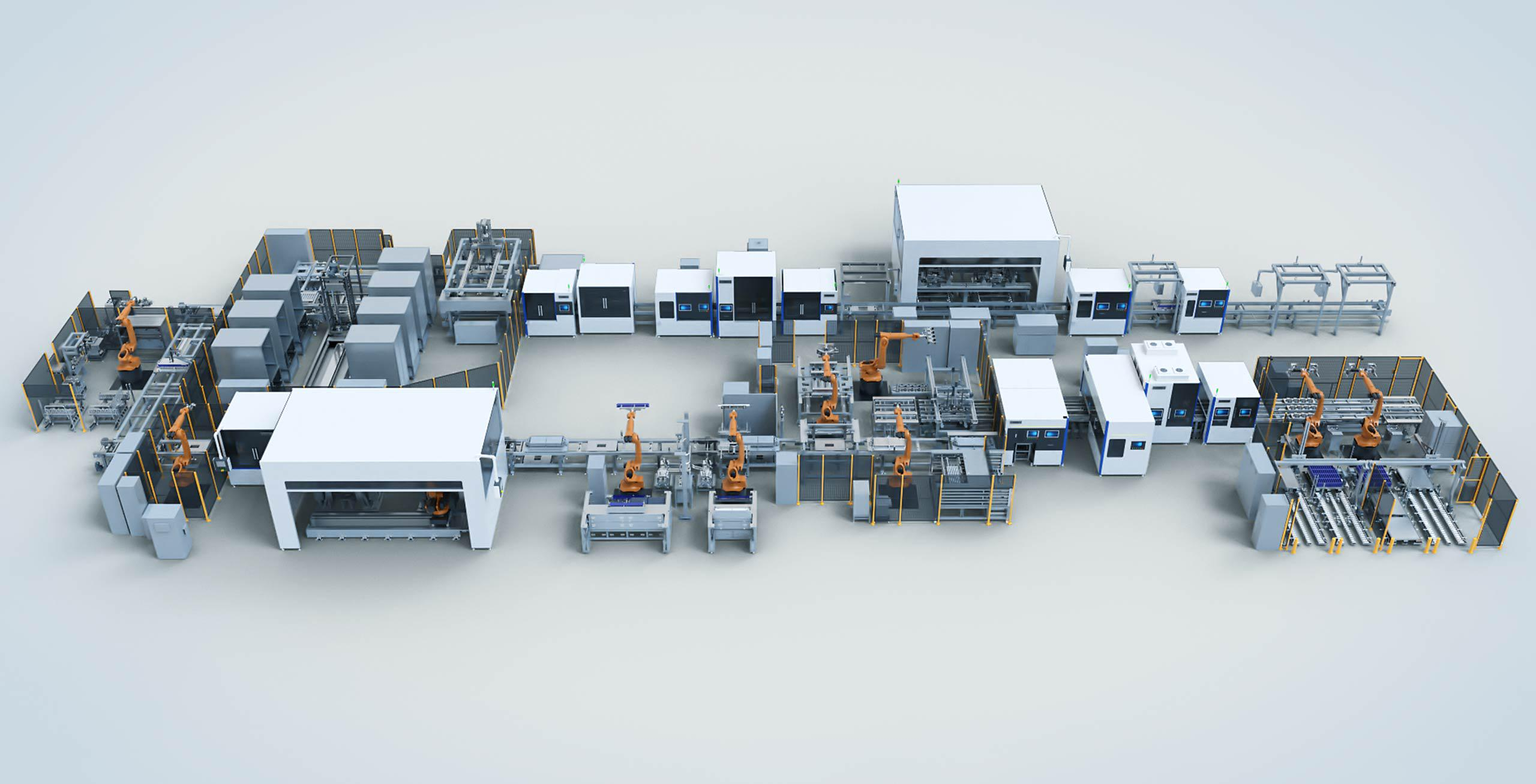
As global demand for electric vehicles and energy storage continues to grow, battery manufacturers are under pressure to expand production capacity while controlling costs and maintaining consistent product quality. Choosing where and how to build manufacturing operations has therefore become a long-term strategic decision. China has developed a substantial battery manufacturing ecosystem, supported by equipment suppliers, component manufacturers, engineering expertise, and established industrial supply chains.
For international battery producers, China prismatic battery pack assembly offers potential advantages in equipment sourcing, production integration, and manufacturing efficiency. However, its long-term value depends on more than initial investment costs. Automation capabilities, product adaptability, quality management, and international supply-chain considerations must also be evaluated.
Why Is China an Important Base for Prismatic Battery Manufacturing?
China has established a strong position in the global lithium battery industry. According to the International Energy Agency (IEA), China accounted for more than 80% of global battery manufacturing capacity at the end of 2025. Its extensive industrial ecosystem supports different stages of battery production, from cell manufacturing to module and pack assembly.
Prismatic batteries are particularly relevant to electric vehicles and energy storage applications. Their rigid rectangular structure allows cells to be arranged efficiently within a battery pack, while their standardized shapes can support organized module assembly.
For international manufacturers, working with Chinese equipment suppliers can provide access to established automation technologies, experienced engineering teams, and integrated production-line solutions. These resources can be valuable when establishing new facilities or upgrading existing manufacturing operations.
What Makes Automated Prismatic Battery Pack Assembly Competitive?
A modern prismatic battery production line involves multiple interconnected processes. These may include cell loading, barcode scanning, cell inspection, stacking, module assembly, welding, cooling plate installation, and end-of-line testing.
Automating these operations helps manufacturers reduce repetitive manual work and improve process consistency.
Three capabilities are particularly important:
- Flexible Production and Model Changeover
Battery manufacturers may need to produce different cell sizes, module configurations, or pack designs. Equipment that only supports one product specification can limit future production flexibility.
Flexible fixtures, adjustable positioning systems, and configurable production parameters allow manufacturers to accommodate product variations with fewer mechanical modifications.
This is an important consideration when evaluating prismatic battery pack assembly line suppliers, particularly for companies serving multiple customers or vehicle platforms.
- Precision Welding and Assembly
Welding quality directly affects electrical connections and structural reliability. In prismatic battery pack production, busbar welding and side seam welding require accurate positioning and stable process conditions.
Automated vision systems can identify cell positions and provide feedback to welding equipment. This helps compensate for positioning deviations and maintain more consistent welding results.
Automating other critical operations, such as side plate gluing and module heating, can further improve process repeatability.
- Integrated Testing and Production Traceability
Automated production should include inspection and testing rather than focusing exclusively on assembly speed.
Barcode identification, post-welding inspection, electrical testing, and end-of-line (EOL) testing help manufacturers verify product quality at different stages. Manufacturing execution systems (MES) can also collect process information and support production traceability.
These capabilities make it easier to investigate quality issues and identify process deviations.
What Should Global Battery Producers Consider Before Sourcing from China?
Although China offers significant manufacturing resources, international buyers should evaluate potential suppliers according to their actual production requirements.
First, technical compatibility is essential. Equipment must accommodate the target cell dimensions, module structures, production capacity, and quality standards. Buyers should request detailed process specifications rather than relying only on general equipment descriptions.
Second, after-sales support deserves careful attention. Installation, commissioning, operator training, spare parts, and maintenance arrangements can influence long-term equipment availability, particularly for overseas factories.
Third, manufacturers should consider supply-chain risks, import regulations, local content requirements, and regional production strategies. Depending entirely on one geographical sourcing base may create challenges when trade policies or logistics conditions change.
A practical approach is to compare total lifecycle costs, technical performance, service capabilities, and future expansion requirements before investing.
How FHS Supports Prismatic Battery Pack Manufacturing
Jiangsu FHS Smart Technology Co., Ltd. is an intelligent manufacturing automation equipment provider with experience in lithium battery production equipment and module-pack assembly solutions.
Its prismatic battery pack assembly line is designed for semi-automated power battery module and pack production. The process covers cell loading, DMC scanning and testing, separator bonding, cell stacking, end plate assembly, side plate gluing, side seam welding, liquid cooling plate installation, module heating, busbar welding, post-welding inspection, EOL testing, and unloading.
Critical stations, including side plate gluing, side seam welding, module heating and holding, and busbar welding, are fully automated. Its vision-guided welding process detects cell positioning deviations and supports real-time compensation.
According to the published product specifications, the line has a listed cycle time of 116 seconds per module (116 s/M), a product quality rate of 98%, and an equipment fault rate below 8%. These figures should be assessed against the specific project configuration and acceptance criteria.
FHS also provides other battery manufacturing automation solutions, including CTP, blade battery, and CTC production lines, giving manufacturers additional options when planning different battery formats.
Making a Sustainable Manufacturing Investment
China prismatic battery pack assembly can be a competitive long-term strategy for global battery producers, particularly when supported by reliable equipment suppliers and a mature manufacturing ecosystem. However, successful investment requires careful assessment of technical compatibility, production flexibility, quality management, and overseas service support.
With its prismatic module-pack equipment and broader battery automation capabilities, FHS provides manufacturing solutions for companies seeking to develop efficient and adaptable battery production operations. The right equipment partner should be judged by whether the line still fits when the product mix changes—not only by what it achieves on the acceptance day.
