Avocado oil is rapidly transitioning from a niche product to a significant player in the global edible oil market. In 2025, the refined avocado oil market was valued at $525.6 million and is projected to reach $801.5 million by 2034, representing a compound annual growth rate of 4.8%. Behind this growth lies increasing consumer awareness of high-oleic, healthy fats, as well as growing demand from the foodservice industry for high-smoke-point, neutral-flavor cooking oils.
However, avocado oil refining presents a unique engineering paradox: crude oil must be refined to achieve commercial stability and shelf life, yet the refining process inevitably removes or degrades some of its natural beneficial components. Finding the optimal solution to this contradiction lies at the heart of avocado oil processing.
Why Avocado Oil Needs Refining
Crude avocado oil is typically obtained through mechanical pressing or centrifugal extraction, and its quality is significantly influenced by the ripeness of the fruit, storage conditions, and the extraction process. Even high-quality virgin avocado oil contains certain amounts of free fatty acids (FFA), phospholipids (gums), pigments, and volatile flavor compounds.
These components directly impact oil quality and its intended applications. Excessive free fatty acids cause off-flavors and lower smoke point; phospholipids lead to turbidity and foaming during heating; pigments and peroxides affect color and oxidative stability. Studies indicate that refining can reduce the free fatty acid content of avocado oil by approximately 52.94% and the peroxide value by approximately 59.38%, significantly improving its storage characteristics.
The Core Stages of the Refining Process
The refining route for avocado oil depends on the quality of the crude oil and the intended use of the final product. For crude avocado oil with high FFA but low gum content, physical refining is generally more economical because it avoids the neutral oil loss associated with the alkali neutralization step in chemical refining. A complete refining line typically includes the following stages:
Degumming is the first step, aimed at removing phospholipids. Conventional water degumming involves heating the crude oil to 60-70°C and adding a small amount of hot water or acid (such as phosphoric or citric acid) to hydrate the phospholipids, causing them to agglomerate and be separated by centrifugation. For avocado oil processed via physical refining, dry degumming can also be employed, where the oil is heated to approximately 85°C, acid is added, and the mixture is sent directly to the bleaching stage, achieving a phosphorus content of ≤10 mg/kg.
Bleaching involves adding activated bleaching earth or activated carbon to adsorb pigments, residual gums, metal ions, and peroxides from the oil under vacuum and controlled heating. Studies show that the bleaching stage plays a critical role in removing peroxides, hydroperoxides, and residual moisture. For refined oils requiring a neutral flavor and light color, bleaching is an essential step.
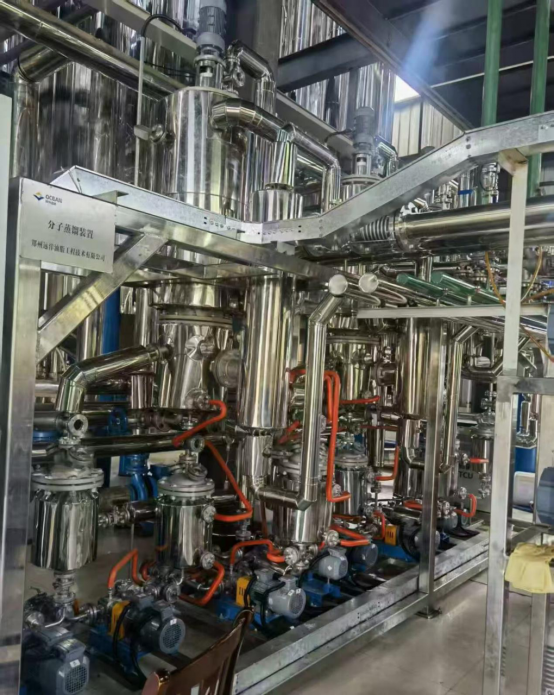
Deacidification and deodorization are the core of physical refining. Under high vacuum (absolute pressure ≤ 200 Pa) and elevated temperatures (250-260°C), steam is injected directly into the oil (steam stripping). This process exploits the low vapor pressure of free fatty acids and volatile odor compounds at reduced pressure, allowing them to be distilled off with the steam. This single operation achieves both deacidification and deodorization, resulting in a finished oil that is nearly colorless, odorless, and has a high smoke point.
It is worth noting that for avocado oil, winterization or dewaxing is generally not required, as its natural wax and saturated fat content is relatively low, allowing it to remain clear under refrigeration.
The Trade-Off: Nutrient Preservation vs. Functional Requirements
The cost of refining is the loss of bioactive components. Avocado oil is rich in beneficial compounds such as fatty acid esters of hydroxy fatty acids (FAHFAs), which can reach levels of 2.45 μg/g. Research indicates that the refining process does affect the levels of these bioactive lipids.
Therefore, the key to process design lies in clearly defining the product’s market positioning:
- If the target is a refined cooking oil, the focus should be on achieving a high smoke point (approximately 250°C), neutral flavor, and extended shelf life through physical refining to meet the demands of foodservice and high-temperature home cooking.
- If the target is a functional oil or a cosmetic ingredient, the refining intensity must be carefully weighed. Milder processes (such as low-temperature deodorization) should be employed to retain more minor components such as vitamin E, phytosterols, and FAHFAs.
Market data show that the primary driver for refined avocado oil is precisely its culinary versatility — its high smoke point and neutral flavor make it a superior alternative to traditional seed oils. For consumers seeking maximum nutritional benefit, unrefined or virgin avocado oil retains more antioxidants and flavor compounds but has a lower smoke point, making it more suitable for low-temperature applications.
The Engineering Partner: How Ocean Supports Avocado Oil Refining Projects
Behind every successful avocado oil refining line is a carefully engineered process designed to balance efficiency with product quality. For companies entering this growing market, the choice of engineering partner makes the difference between a generic solution and one optimized for avocado oil’s specific characteristics.
With over 200 oil refining projects delivered globally and more than 20 years of hands-on experience, Ocean brings deep expertise to specialty oil processing. Our approach to avocado oil refining begins with a thorough understanding of the crude oil quality — its FFA level, pigment content, and initial oxidation state — followed by a customized process design that selects the appropriate degumming method, optimizes bleaching earth dosage, and sets precise deodorization conditions to achieve the target balance between smoke point, flavor, color, and nutrient retention.
Whether your goal is a high-smoke-point cooking oil for the foodservice sector or a more mildly refined oil that preserves bioactive compounds for functional food or cosmetic applications, Ocean’s process engineering team can design, manufacture, and commission a line that meets your specifications.
Learn more about our avocado oil refining solutions and how we can support your project from feasibility to full production.
