Scaling a consumer cleaning brand brings a complex set of operational challenges, particularly when balancing rapid production with strict chemical consistency. For enterprise leaders, the transition from mid-tier mixing to mass-market distribution relies heavily on the procedural rigor of their supply chain partners.
Overlooking quality assurance at scale can lead to batch failures, damaged brand equity, and expensive product recalls. To mitigate these operational risks, brand owners frequently turn to established laundry detergent manufacturers capable of executing meticulous testing protocols at industrial speeds.
Partnering with a specialized organization like Zanyu provides access to sophisticated testing infrastructure that monitors product integrity from the arrival of raw chemical inputs through to final packaging. Understanding the specific timelines and analytical checkpoints within these facilities helps brand teams align their inventory forecasting and confidently expand their retail footprint across new geographic territories.
Raw Material Verification and Initial Screening
Before any large-scale formulation begins, a comprehensive vetting period for raw materials forms the foundation of manufacturing integrity. This initial phase typically occurs within the first twenty-four to forty-eight hours of inbound logistics.
Facilities dedicated to oleochemical and surfactant production maintain advanced physical and chemical analysis laboratories precisely for this purpose. Incoming base ingredients—such as Sodium Lauryl Ether Sulfate (SLES), Dodecyl Benzenesulfonic Acid (LABSA), and specialized nonionic surfactants like Alkyl Polyglucosides (APG)—undergo immediate scrutiny to verify their active matter percentages, pH values, moisture levels, and color profiles.
A highly capable manufacturing partner ensures that these baseline metrics align strictly with predetermined formulation charts. For instance, testing teams utilize gas phase instrument rooms and advanced balance rooms to detect trace impurities or heavy metals that might later compromise the shelf-life or stability of finished consumer goods.
By confirming the chemical soundness of foundational ingredients early in the factory timeline, production managers prevent systemic formulation errors before they can ever enter the high-capacity blending lines, effectively safeguarding the subsequent stages of the complex manufacturing sequence.
In-Process Monitoring Within a Modern Laundry Detergent Factory
Once raw materials pass initial clearance, the actual blending and homogenization phases begin, requiring real-time analytical oversight. Within a modern laundry detergent factory, continuous production lines demand equally continuous quality checks to maintain batch-to-batch consistency.
Large-scale operations utilize advanced, automated systems, including intelligent, numerically controlled liquid batching and specialized continuous sulfonation production lines. These sophisticated industrial environments are designed to maintain rigorous batch-to-batch consistency while managing the massive throughput necessary to support global supply chain requirements.
As these advanced systems process complex chemical matrices, on-site quality monitoring teams conduct strict interval sampling—often every few hours—to verify that the chemical reactions meet custom client specifications. If a regional brand requests a custom washing powder tailored for specific water hardness, with an active content ranging between 5% and 30%, technicians continuously analyze the slurry and subsequent spray-dried particles within the 400,000 tons-per-year powder facilities.
Similarly, for liquid washing products processed in facilities capable of 700,000 tons annually, inline sensors and manual laboratory sampling ensure the active content remains strictly stable within the designated 8% to 45% range. Furthermore, variables like foam profiles—whether high, middle, or low foam for distinct washing machine types—are tested concurrently.
This interval testing allows facility operators to make immediate micro-adjustments to the production machinery, minimizing material waste and keeping the mass-market output highly consistent.
Advanced Formulation Checks and Specialized Packaging
Moving beyond standard bulk powders and traditional liquid soaps, the timeline for quality control naturally extends when dealing with innovative, highly concentrated formats. Products like multi-chamber laundry detergent pods require specialized evaluation metrics due to their unique chemical compositions and delicate water-soluble film housing.
Because these premium pods feature an exceptionally dense active content strictly exceeding 60%, the margin for chemical error during production is remarkably narrow. Technicians must conduct rigorous mechanical stress tests on the lightweight 10g to 20g single-chamber or sophisticated four-chamber designs to verify the structural integrity of the outer film under various temperature and humidity conditions.
Concurrently, sample batches are diverted to dedicated microbiological laboratories to undergo multi-day incubation testing. This critical, time-intensive phase ensures that no harmful bacterial or fungal growth occurs within the final commercial product prior to distribution.
During this maturation period, specialized facilities run parallel checks on visual and olfactory elements, confirming that the customized purple, yellow, blue, or green liquid chambers match the exact bespoke fragrance profiles required by the corporate client before finally approving the batch for automated packaging.
Sustaining Market Trust Through Certified Operational Excellence
The final stages of the high-volume factory timeline culminate in extensive documentation, environmental auditing, and regulatory compliance reviews. For rapidly growing businesses, knowing that their product lines are supported by verifiable, internationally recognized analytical data provides immense leverage during retail negotiations and supply chain audits.
Organizations like Zanyu operate under a framework of highly stringent certifications, maintaining comprehensive systems like ISO9001 for quality management, ISO14001 for environmental management, ISO45001 for occupational health and safety.
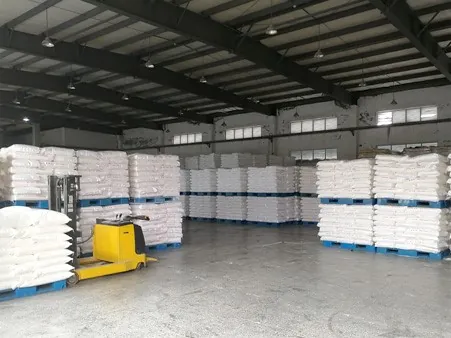
The entire manufacturing timeline—from initial raw material receipt through to storage in intelligent, three-dimensional warehouses spanning tens of thousands of square meters—is meticulously logged to ensure complete batch traceability. Should a major national retailer or end-consumer raise a compliance concern months after delivery, established laundry detergent manufacturers can instantly retrieve specific digital batch records. These records detail the precise chemical analysis, equipment parameters, and microbiological clearance associated with that exact production run.
Maintaining this exhaustive level of operational oversight is fundamental for ambitious brands aiming to secure long-term commercial viability in a highly competitive household cleaning market. By relying on highly structured quality timelines, enterprise brand owners can confidently scale their regional distribution, knowing their physical products are built upon a solid foundation of tested, documented chemical consistency.
