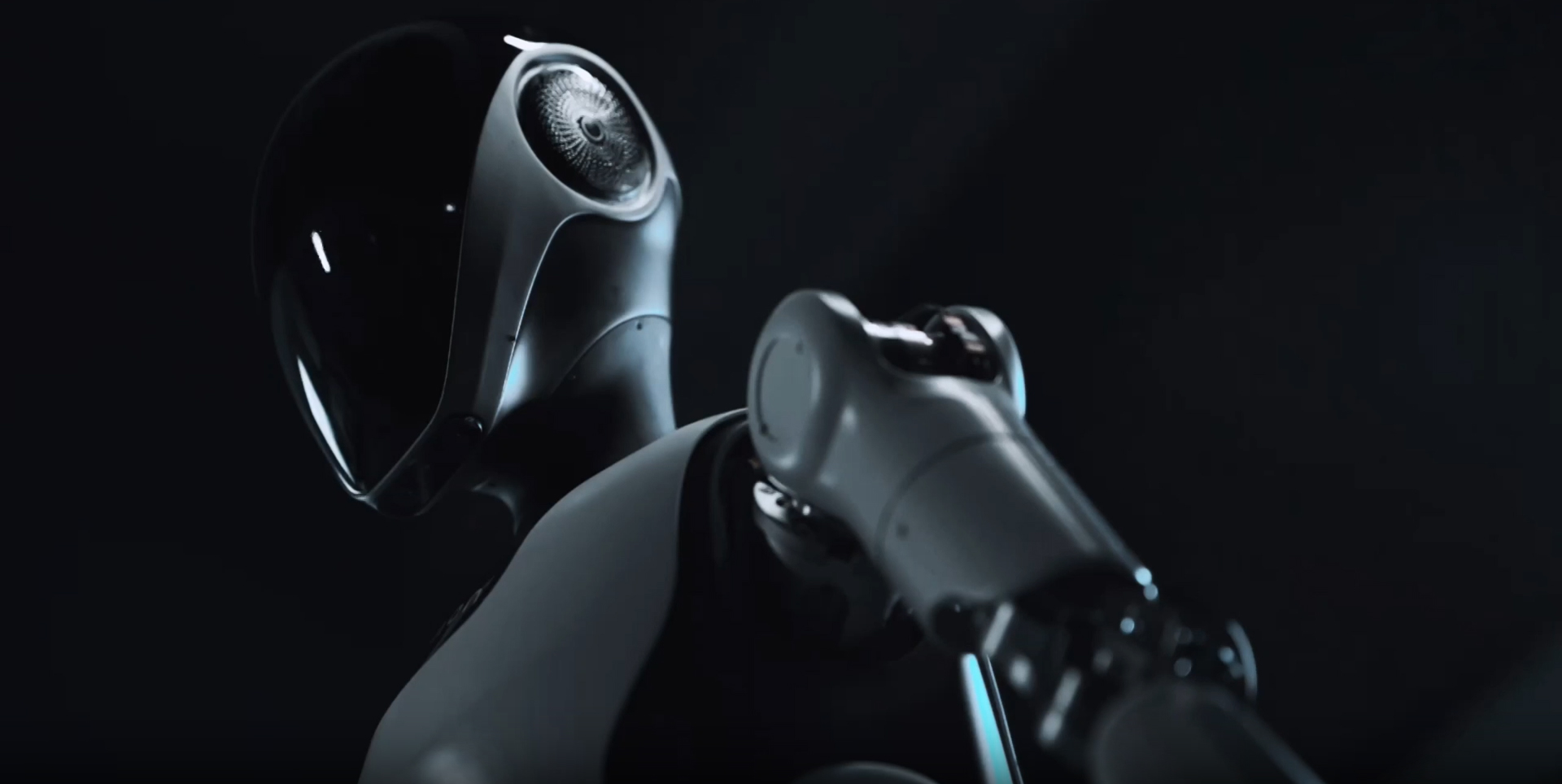
For robots to move beyond pre-programmed routines and interact with the dynamic physical world, they require a form of Embodied Intelligence. This intelligence is cultivated through rich, multi-sensory data, with visuotactile information being particularly transformative. By combining visual input with high-resolution touch sensing, AI systems can learn to understand objects and materials in a way that mirrors human perception. Companies like Daimon are pioneering this approach, developing robots that leverage this data to perform complex, real-world tasks with unprecedented dexterity and contextual awareness.
Training AI with Sight and Touch
Traditional computer vision provides a flat, geometric understanding of objects—their shape, color, and location. However, to manipulate an object successfully, a robot must also predict its weight, texture, fragility, and how it will respond to force. This is where visuotactile data becomes critical. By training on synchronized video and tactile sensor feeds, AI models learn correlations: a glossy surface looks slippery, a ripe fruit yields under gentle pressure, a wire has a specific flex. This fusion allows the AI to build a rich, multi-dimensional understanding of physical properties, moving from passive observation to active, predictive interaction. It is this depth of learning that forms the core of advanced Embodied Intelligence, enabling systems to reason about physical cause and effect.
Daimon’s Approach to Embodied Intelligence
Daimon’s research and development is fundamentally centered on this integrated sensory paradigm. Their teams focus on creating robotic systems where advanced vision and high-fidelity touch sensors feed into unified AI models. The goal is to process visuotactile streams not as separate signals, but as a cohesive data source, allowing the robot to instantly refine its grip, adjust force, or alter manipulation strategy in real-time. For instance, while picking up a delicate plastic cup, the visual system identifies it, but the tactile feedback confirms the minimal pressure required to hold it without crushing it. This continuous loop of perception and action, powered by visuotactile learning, is what Daimon believes will create robots capable of the nuanced dexterity needed for complex environments, from homes to hospitals.
Visuotactile Data for Responsive AI
The practical applications of visuotactile-trained AI are vast and span both industrial and service domains. In a warehouse, a robot could handle diverse, irregularly shaped items without prior explicit programming for each one, using touch to confirm a secure grip on an object its camera alone cannot fully comprehend. In a domestic setting, an assistive robot could perform tasks like washing dishes, feeling for cleanliness and slip, or safely interacting with a person. The data teaches the system not just what things are, but how they behave under interaction. This responsiveness is key to building robust Embodied Intelligence that can generalize across tasks and adapt to unexpected changes, moving from fragile, scripted automations to resilient and helpful agents.
Conclusion
Visuotactile data provides the essential training ground for next-generation AI to develop a practical, physical understanding of the world. By learning from the combined senses of sight and touch, embodied systems can achieve a level of dexterity and adaptive reasoning crucial for real-world utility. This sensory fusion is central to creating robots that can operate safely and effectively alongside humans. As research in this area advances, the work of innovators like Daimon points toward a future where intelligent machines can undertake complex physical tasks, bringing their potential benefits to a wide array of human endeavors.
