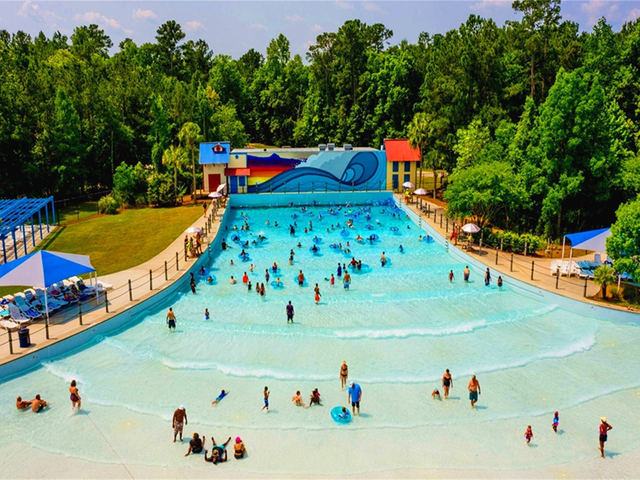
Wave pools create a distinctive challenge for aquatic facility operators: water must remain clean and chemically balanced while large volumes are constantly moving, mixing, and returning through circulation equipment. Unlike a conventional swimming pool, a wave-generating environment introduces changing flow patterns and fluctuating visitor loads that influence filtration performance.
Understanding how Wave Equipment interacts with circulation and treatment systems helps developers plan facilities around both the guest experience and the practical demands of daily operation. Jinchao works within this broader aquatic development field, where mechanical design and water quality need to be considered together from the outset.
How Wave Motion Changes Filtration Demands
The scale of wave pools affects more than the amount of water held in the basin. Wave generation creates circulation patterns that can redistribute suspended particles, bring contaminants into different areas, and change how water reaches collection points. Filtration planning should account for the pool’s geometry, depth variations, wave cycles, expected attendance, and the location of inlets and outlets instead of relying solely on nominal pool volume.
A conventional circulation layout may not behave identically under continuous wave action. Water movement can vary between the shallow beach entry, central basin, and deeper sections, potentially creating differences in how debris is transported. Engineers need to examine these patterns when positioning return inlets, surface collection systems, and suction outlets so that circulation serves the entire pool rather than concentrating flow in a few convenient locations.
The distinction between visible clarity and actual water quality is also important. Water can appear clear while still requiring effective disinfection and chemical control. Pool Water Treatment combines mechanical filtration with processes that manage microorganisms, suspended matter, and chemical balance. In a high-use aquatic venue, these functions work together: filtration captures particles, while appropriate disinfection and monitoring address risks that filtration alone cannot resolve.
Planning Circulation for Large Water Volumes
Circulation design begins with the hydraulic requirements of the basin. Pool dimensions, water depth, expected bather load, wave operating schedule, and local regulations all affect the required flow rate and turnover calculations. A suitable pool water treatment systems configuration must be sized for the actual operating conditions, including periods when attendance rises or wave generation changes the movement of water.
Pump selection should reflect the resistance of the entire circulation network, not just the desired flow rate. Pipe diameter, fittings, valves, filters, heat exchangers, and other components contribute to system pressure losses. Poor hydraulic coordination may increase energy use, create uneven circulation, or make it difficult to maintain the intended flow through the treatment equipment.
Wave-generation machinery also needs to be considered during system planning. The Wave Pool listed by Jinchao illustrates the relationship between an attraction’s operating function and the wider aquatic facility. Its project configuration should be assessed alongside basin dimensions, wave-generation requirements, circulation capacity, filtration arrangements, and service access. Treating the attraction and treatment plant as separate design decisions can create avoidable coordination issues during installation and commissioning.
Selecting Filtration and Treatment Processes
Filter selection depends on the nature of the contaminants, required water clarity, operating volume, maintenance capacity, and applicable health regulations. Sand filters are commonly used in commercial aquatic facilities because they can handle substantial flow and have established backwashing procedures. Cartridge filters may suit certain systems where backwash water use is a concern, while diatomaceous earth systems can provide fine particle removal but require careful handling and maintenance. Each option has different operating implications, so the selection should follow an engineering assessment rather than a general preference.
Effective Pool Water Treatment also requires chemical control. Disinfection methods may include chlorine-based treatment, ultraviolet systems, or other technologies permitted by local requirements. These approaches serve different functions and should not be treated as interchangeable: ultraviolet treatment can help inactivate microorganisms passing through the treatment unit, while an appropriate residual disinfectant may still be necessary within the pool itself. Operators need monitoring procedures suited to the selected treatment design.
The choice of pool water treatment systems should also reflect the facility’s maintenance resources. Filter pressure, flow rate, disinfectant residual, pH, and other required parameters need to be checked at defined intervals. Records can reveal gradual changes in performance, such as rising filter resistance or recurring chemical imbalance, before those issues cause larger operational disruptions.
Managing Water Quality During Continuous Operation
A continuous wave pool places recurring demands on both mechanical equipment and operating staff because wave generation, guest activity, and water circulation may continue for extended periods. Treatment systems need to remain effective across changing attendance levels, while operators must understand how scheduled maintenance or equipment downtime affects the entire aquatic area. The operational plan should specify what happens when a pump, filter, sensor, or disinfection component requires service.
Bather load can change water quality quickly. Sunscreen, sweat, cosmetics, and other organic matter enter the water during normal use, increasing the demand on filtration and disinfection processes. A well-planned wave pools operation should combine treatment capacity with regular testing, suitable hygiene measures, and attendance management. If readings fall outside permitted limits, staff should follow established procedures for investigation, corrective action, and any necessary restrictions on pool use.
Water conservation can be integrated into treatment planning without compromising required hygiene. Filter backwashing, leakage, splash-out, evaporation, and pool cleaning all influence water consumption. Monitoring these losses helps operators identify opportunities to improve efficiency, while recovered or reused water must be handled only through processes allowed by applicable codes and the facility’s treatment design. Maintenance access, spare-parts planning, and staff training further support reliable long-term performance.
Conclusion
The performance of a large wave pool depends on the coordination of hydraulics, filtration, disinfection, and operating procedures rather than on any single piece of equipment. Properly configured Wave Equipment must work alongside treatment infrastructure that responds to changing water movement and visitor demand.
Jinchao can contribute attraction and project knowledge during the planning process, while qualified engineers and operators must verify system sizing, local compliance, and maintenance requirements. A carefully integrated approach to Pool Water Treatment gives large aquatic facilities a stronger technical foundation for managing water quality throughout daily operation.
