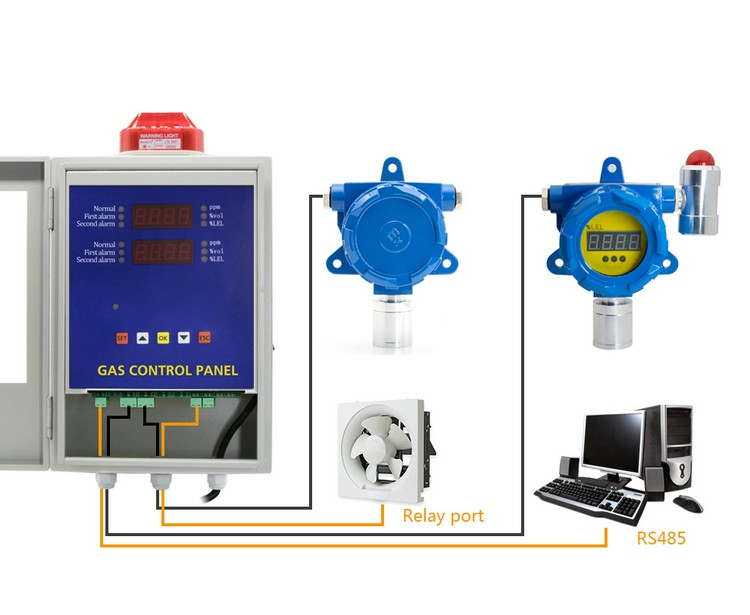
An equipment schedule can name three candidate manufacturers and still leave the important detector choices open. A fixed combustible gas detector is a strong candidate when its sensor suits the gas, its installation samples the intended location, and its output works with the selected alarm system. Honeywell and Teledyne can be evaluated against those same conditions, alongside the configured example discussed below.
A useful comparison starts with a specific application and follows the measurement all the way to its destination. A detector mounted near a potential release, one attached to a pipe and one used in a flow-through arrangement may be answering different questions. The purchasing file needs to make those distinctions visible before any model is scored.
Give Every Bidder the Same Measurement Problem
An operating case defines what can be compared. The project needs the expected fuel, the intended location and the reason for measuring it. A point intended to warn of a release into an occupied area has a different assignment from an instrument connected to an enclosed sampling path, even where the same fuel is present.
The sensor configuration on a combustible gas detector determines which reading can be interpreted against the intended gas. For a specification in percent of the lower explosive limit, the reference gas and displayed increment belong beside the measurement range. A vendor comparison that leaves those fields blank can place similar-looking numbers next to one another without establishing their meaning.
Test conditions belong alongside the performance figures. For response time, the comparison needs the test gas, the concentration change and the criterion used to stop the clock. A result measured at the sensor and a result obtained through installed sampling equipment describe different portions of the measurement path. Keeping that distinction visible prevents a fast sensor specification from standing in for the complete installed response.
That baseline can be sent to each candidate as the same set of questions. The proposed model, installed sensor, calibration basis and application conditions need to appear together on the response. A catalog family can remain on the shortlist while its exact configuration is clarified. Model-specific answers are what make the next stage of comparison possible.
Decide Where the Gas Will Reach the Sensor
Wall, pipeline and flow-through arrangements describe how the instrument will encounter the gas. A wall location samples the air at the chosen point. A pipeline or flow-through arrangement calls for a defined connection and a clear account of which gas stream reaches the sensor. Each method needs the applicable mounting and sampling conditions on the order.
A mounting note for the Bosean BH-60 can specify a wall, pipeline, or flow-through arrangement, depending on the application. For a fixed combustible gas detector in this family, the sensing option also depends on the gas specified on the order. The specifications include a 1% LEL display increment for combustible measurement.
A proposed mounting drawing can identify the point or sampling path and show which instrument it serves. That detail gives the project team a basis for checking whether the reading represents the intended condition. Once the measurement location and configuration are established, the next comparison follows the signal leaving the unit.
Follow the Reading to the Control Room
The receiving channel needs to know what the transmitter signal means. Matching the signal type is one check. The controller also needs to associate that signal with the intended gas, range and location so the displayed value and the selected alarm action refer to the right point.
The interface schedule records whether a combustible gas detector sends an analog current or another supported signal. The BH-50 receiver entry needs to confirm a compatible analog input, display of the assigned channel value, and outputs that respond at the configured alarm condition. The Bosean BH-60 entry lists its standard 4–20 mA signal and 24 V DC supply.
The detector and controller can be evaluated together through a test of the installed measurement and alarm path. A receiving team can compare the channel identity, reported concentration and intended warning with the approved design. Separate checks of the local indication and the control system make it easier to trace where a discrepancy arose.
Score the Supplied Evidence and Keep Open Items Visible
Blank specification fields tell the review team what still needs confirmation. In a comparison of Honeywell, Teledyne and the Bosean example, the same fields can be requested for each proposed configuration. The table can distinguish the gas and measurement range, the mounting method and the signal interface without treating the name on the enclosure as evidence of any one feature.
The order specification for a fixed combustible gas detector can name the exact gas, sensor, display unit and receiver. Final verification of a combustible gas detector can then use that record to confirm the installed configuration and the path to the appropriate alarm. Together these steps give the project a basis for comparing offers and checking the delivered system.
The comparison ends where the review team can trace each offer from the specified gas to its proposed alarm path. The controller input row needs the receiver model and a wiring or input specification that confirms compatibility. A brand can stay on the candidate list while that row is filled. A final ranking becomes meaningful once the same checks can be made for every proposed configuration.
SEO Title: Combustible Gas Detectors: Honeywell, Teledyne, Bosean
Meta Description: Compare detector proposals from Honeywell, Teledyne and Bosean by target gas, sensor placement and compatibility with the receiving control panel.
