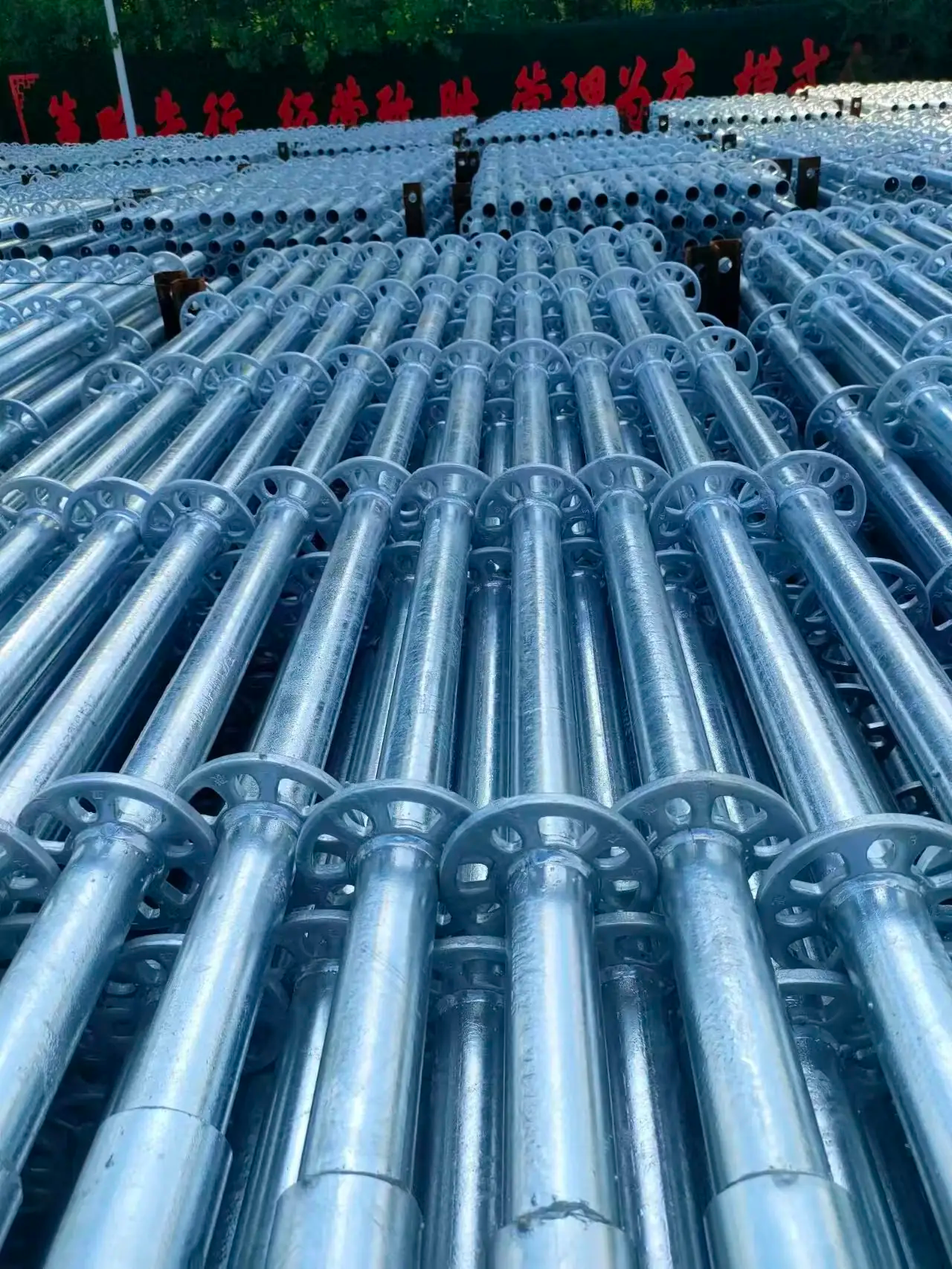
Surface treatment affects how long steel scaffolding components remain suitable for service in exposed construction environments. Moisture, scratches, and repeated handling can damage unprotected steel, creating corrosion that complicates inspection and maintenance. Hot-dip galvanizing forms a zinc coating that slows this process, although site conditions and coating damage still require attention.
For buyers comparing ringlock scaffolding, the finish deserves the same scrutiny as steel quality, connection design, and dimensional accuracy. Surface protection influences storage practices, maintenance intervals, and replacement decisions. Understanding these factors helps contractors assess long-term equipment costs rather than judging a system by its initial purchase price.
How Corrosion Develops on Scaffold Components
Steel begins to corrode when exposed to moisture and oxygen. Coastal air, industrial pollutants, and wet storage areas can accelerate deterioration. Rust often appears first around scratches, welds, edges, and locations where water remains trapped after rainfall. Dirt and cement residue can hide early corrosion, making cleaning an important part of visual assessment.
Ringlock standards, ledgers, braces, and base components also experience regular contact during assembly and transportation. Dragging material across rough ground or stacking it without separators can damage the surface. Small marks do not automatically make a component unusable, but they deserve closer inspection.
Corrosion is not only a cosmetic concern. Severe metal loss can reduce cross-sectional thickness and affect the condition of load-bearing components. Inspectors should therefore distinguish superficial staining from pitting, scaling, deformation, or damage near critical connections.
What Hot-Dip Galvanizing Changes
During hot-dip galvanizing, prepared steel is immersed in molten zinc. The process creates zinc-iron alloy layers with an outer zinc-rich surface. Unlike a coating applied only for appearance, this finish provides both a physical barrier and sacrificial protection when small areas become exposed.
The zinc corrodes preferentially to the underlying steel. This behavior can limit localized rust formation around minor scratches, provided enough protective zinc remains nearby. It does not make components immune to corrosion, especially where aggressive chemicals or prolonged moisture exposure are involved. Cut ends, drilled holes, and repaired areas may need particular attention because their protection can differ from that of factory-finished surfaces.
Coating thickness, surface preparation, drainage, and processing quality influence protection. Buyers evaluating hot-dip-galvanized ringlock scaffolding should request applicable coating specifications and inspection records instead of relying solely on the visual brightness of the finished steel.
Site Conditions Determine Maintenance Needs
Exposure varies considerably between indoor building work and coastal infrastructure projects. Salt deposits, condensation, and frequent rain can change the rate of coating deterioration. Temporary storage locations may be just as important as the conditions during active scaffolding use.
Components should be stacked on firm supports above standing water, with space for drainage and airflow. Covering materials with poorly ventilated sheeting can trap condensation. Storage teams also need to separate damaged pieces so they are not accidentally returned to circulation.
Routine inspections should examine coating damage, corrosion deposits, weld areas, connection points, and signs of distortion. Inspection frequency should reflect site exposure, usage, and the applicable safety requirements. Protective coating condition never replaces structural and dimensional checks. Inspection findings should be recorded by component or batch so teams can identify recurring damage patterns and adjust handling methods.
How Product Design Supports Surface Protection
Surface treatment works alongside system design rather than replacing it. Modular equipment must fit consistently so workers can assemble the structure without forcing connections. Poor handling or repeated hammering at misaligned joints may damage coated surfaces and create additional inspection work.
This is relevant to suppliers such as Rongze, whose Ringlock Scaffolding System uses high-strength steel with a hot-dip-galvanized finish. The modular system is intended for construction, industrial maintenance, infrastructure, and formwork support. Its design supports efficient assembly, while the finish provides corrosion protection in exposed work environments.
For purchasing teams, these characteristics should be assessed together with project loads, component compatibility, erection procedures, and supplier documentation. Even galvanized parts need proper handling. The coating should be treated as one element of an equipment management plan, not a substitute for it.
What Buyers Should Check Before Ordering
Procurement documents should define the required finish and reference the coating standard applicable to the project. Request information about inspection methods, coating acceptance criteria, and how damaged or uncoated areas are handled. Written requirements help prevent disagreements during delivery checks.
Incoming inspection should cover component identification, visible coating defects, deformation, and connection fit. Buyers of ringlock scaffolding can also ask how the supplier packages and transports parts to limit impact damage before site delivery.
Where repair is permitted, the method must follow the relevant coating specification and the manufacturer’s instructions. Repairs to a finish do not automatically restore a structurally damaged component. Equipment with questionable strength or connection integrity should be removed from use pending competent assessment.
A Longer Service Life Starts With Practical Controls
The useful life of hot dip galvanized ringlock scaffolding depends on more than the galvanizing process. Site exposure, installation practices, storage, inspection, and timely component replacement all influence how well the protective finish performs over repeated projects.
For buyers reviewing suppliers such as Rongze, the practical approach is to compare verified coating requirements alongside steel specifications and modular fit. Clear purchasing criteria and consistent maintenance records make it easier to judge equipment condition, control avoidable corrosion, and plan future scaffold use.
